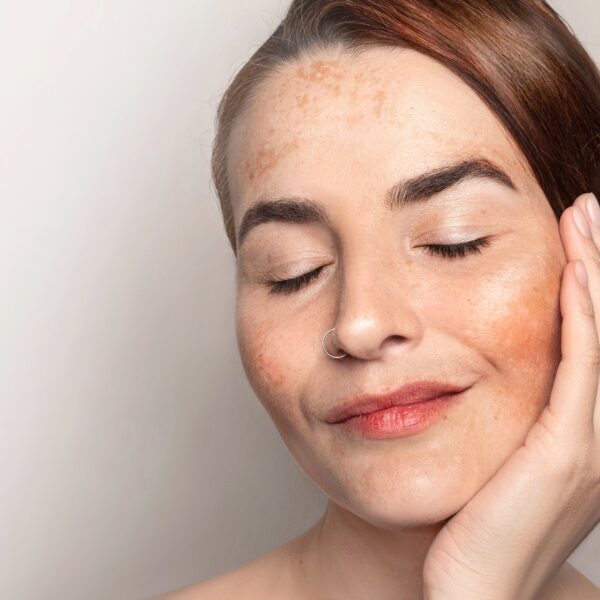
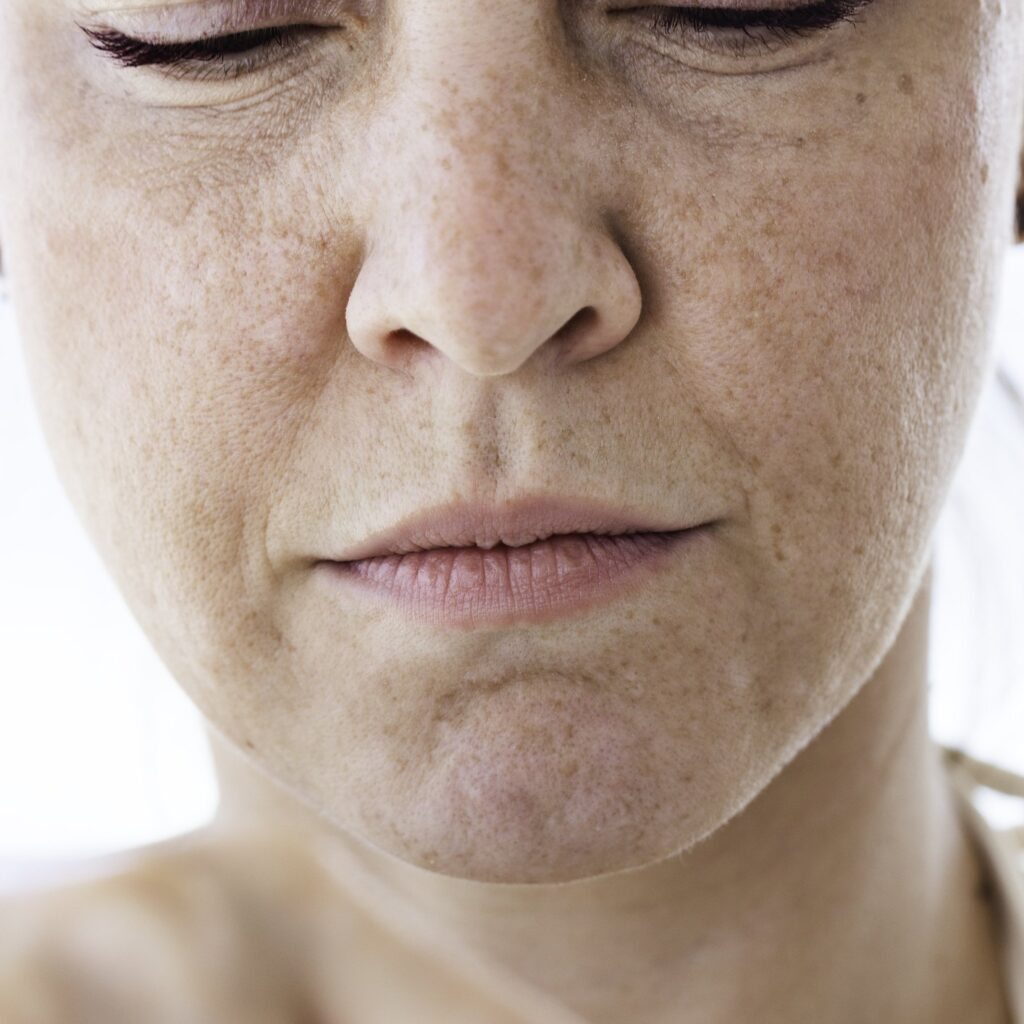
Patches of melasma across the cheek and upper lip

Skin concerns · London

Melasma and Pigmentation

You notice it in holiday photos first: a shadow across the cheeks, or a scattering of spots that make-up no longer hides. Melasma and sun damage look alike and each has its own treatment, so the Wimpole Street team starts by working out which is yours, and that is what makes the result last.

At a glance

  • Types Melasma, sun damage, post-inflammatory, freckles
  • Treated at Wimpole Street, London
  • Course Varies, typically 3 to 6 months
  • Essential Daily SPF 50, without exception
  • First step Assessment and skin typing

What it is and why it happens

Four different conditions look broadly the same in a mirror and respond to completely different things, which is why the right diagnosis is the most valuable part of any pigmentation plan.

Melasma asks for the most expert hand. It appears as symmetrical brown patches across the cheeks, forehead and upper lip, it is driven by hormones as much as by sun, and it is long-term. Heat and aggressive laser stir it up, so it is treated gently, with Cosmelan and careful home care that suppress pigment and keep the skin calm. Melasma is managed rather than cured, and with maintenance it can be substantially cleared and held.

Sun damage behaves quite differently. Discrete brown spots on the face, hands and chest, sitting where the sun has hit, and it responds well and often quickly to treatment.

Post-inflammatory pigmentation is the mark left behind after a spot or an injury. It fades on its own given time, and treatment speeds that up.

Regents Park Aesthetics identifies which you have before recommending anything, and offers the Cosmelan protocol, peels and microneedling for pigmentation at the Wimpole Street clinic, a few minutes from Bond Street station.

Symmetrical brown patches of chloasma on the face
Know your type

Which type is yours?

Melasma

Symmetrical patches, cheeks and upper lip

Melasma

Hormonally driven and worsened by heat as well as light. Pregnancy, the combined contraceptive pill and hormone replacement are common triggers. It is long-term and likes to return, and it is the one type that needs gentle handling in place of aggressive laser. Cosmelan plus disciplined home care and daily SPF is the approach that holds it beautifully.

Sun damage and age spots

Discrete brown spots, face, hands, chest

Sun damage and age spots

Accumulated ultraviolet exposure producing defined spots on exposed areas. The most straightforward type to treat, and it often responds well to a course of treatment.

Post-inflammatory pigmentation

Flat marks left after spots or injury

Post-inflammatory pigmentation

Not a pigment disorder so much as a healing response. It fades on its own over months to a couple of years, faster with treatment. More pronounced and longer lasting on deeper skin tones. Peels and disciplined home care are usually enough.

Freckles and lentigines

Small, scattered, often since childhood

Freckles and lentigines

Genetic freckling darkens with sun exposure and is generally harmless. Treatment is available where they bother you, and many people simply love their freckles and keep them in check with sun protection. Your clinician checks every spot at the consultation before anything is treated.

Treatments that address it

Cosmelan Depigmentation A well-regarded option for melasma. A professional mask applied in clinic, followed by a strict home maintenance phase over several months. It suppresses pigment production rath Chemical Peels Medical-strength peels lift post-inflammatory pigment and improve overall tone. The mainstay for marks left by acne, and a safe option across skin tones when the right formulation SkinPen Microneedling Improves pigment indirectly by accelerating skin turnover, and suitable for most skin tones after a skin check. Frequently combined with peels for post-inflammatory marks. Used cautiously in active melasma
A medical peel kit and vial laid out on the treatment room counter Practitioner applying a chemical peel mask with a brush
£950 £120 £250
Melasma Post-inflammatory marks Prevention and maintenance
Yes, designed for it Yes, medical strength Yes
5 to 7 days peeling 24 to 48 hours None
1 mask plus home phase 4 to 6 sessions Ongoing

How we assess and treat

Assessment at Regents Park Aesthetics starts by establishing which type of pigmentation you have, because that single decision shapes the whole plan. We look at pattern and symmetry, ask when it appeared and what was happening at the time, take a hormonal history, and record your Fitzpatrick skin type.

We also assess depth. Epidermal pigment sits near the surface and treats well. Dermal pigment sits deeper and responds more slowly, so the plan allows extra time for it. Mixed patterns are common.

Where melasma is suspected, the approach is gentle and precise. Heat alone can trigger it, which means lasers, sun and even hot yoga are relevant. Regents Park Aesthetics starts with Cosmelan and home care and adds energy-based treatment carefully, so the skin stays calm and the result keeps improving.

Your clinician examines every pigmented spot closely at the consultation, and refers you to a dermatologist wherever that is the better route.

Clinic brochure and skincare products on a treatment room counter

Can you treat it at home?

Sun protection is the single most powerful thing you can do for pigmentation. A broad-spectrum SPF 50 every single day, reapplied, in winter and through cloud, does more than any treatment in this list, and it is what makes every treatment last.

For melasma specifically, look for a tinted mineral sunscreen containing iron oxide. Visible light drives melasma as well as ultraviolet, and standard chemical sunscreens do not block visible light. The tint is what does it, and this is one of the few genuinely useful pieces of product advice in the whole category.

Active ingredients that earn their place: tyrosinase inhibitors such as prescribed tyrosinase inhibitors; vitamin C for antioxidant protection and mild brightening; vitamin A skincare to speed turnover; niacinamide to interrupt pigment transfer. Prescription-strength options exist through the clinic.

Home care keeps pigmentation under control, and established melasma clears best when it is paired with treatment in clinic. Keep the skin calm: scrubs, harsh exfoliants and lemon juice cause inflammation, which triggers more pigment, so gentle always wins.

A brightening cream being applied to pigmented skin at home
Questions, answered

Frequently Asked Questions

Symmetrical brown or grey-brown patches, usually across the cheeks, forehead and upper lip. It is driven by hormones and worsened by sun and heat. It is long-term and likes to return, so it is managed with a plan that keeps it clear.

A combination of hormonal influence and light exposure. Pregnancy, the combined contraceptive pill and hormone replacement are common triggers, which is why it is far more common in women. Heat alone can provoke it, independent of ultraviolet.

Very clear. Melasma is long-term, and it can be substantially cleared and then held with maintenance and disciplined sun protection. A little return when protection lapses is normal, and a maintenance session brings it back under control.

Cosmelan, combined with a home maintenance phase and daily SPF 50. It suppresses pigment production rather than destroying pigment, which keeps the skin calm, exactly what melasma needs.

Sparingly, and gently. Heat is itself a melasma trigger, so aggressive laser is avoided and Cosmelan leads the plan. Where laser is used on melasma at all, it is at low settings and with great care.

Melasma is symmetrical patches driven partly by hormones, is chronic and needs careful treatment. Sun damage is discrete spots on exposed areas, driven purely by ultraviolet, and responds quickly to laser. They look similar and behave completely differently.

Cosmelan is £950 including the in-clinic mask. Chemical peels start at £120. We quote a plan rather than a session, because pigmentation needs a course and a maintenance phase.

Sun damage often responds well within a short course of treatment. Melasma takes three to six months of combined treatment and home care. Post-inflammatory marks fade over three to twelve months, faster with treatment.

Post-inflammatory pigmentation does, over months to a couple of years. Melasma and sun damage need treatment, and daily sun protection keeps both from deepening.

A tinted mineral SPF 50 containing iron oxide. Visible light drives melasma and standard chemical sunscreens do not block it, whereas the tint does. Apply daily and reapply, in winter and through cloud.

Yes, as a supporting player. It provides antioxidant protection and mild brightening, and works best alongside a tyrosinase inhibitor and sun protection rather than on its own.

Yes, for both melasma and post-inflammatory pigmentation, and your clinician can arrange prescription-strength options through the clinic.

Yes, with treatment chosen for your skin. Deeper skin tones are more prone to post-inflammatory hyperpigmentation, so gentle approaches lead. Cosmelan and medical peels are used routinely; ablative laser rarely, and only after careful assessment.

Visit our Wimpole Street clinic

Let’s talk about your skin.

A consultation is the first step towards a plan that feels right for you.

Address19 Wimpole Street, London W1G 8GE
Telephone020 7580 4813