Puffiness and shadowing beneath the lower eyelid

Skin concerns · London

Eye Bags and Dark Circles

A colleague asks if you slept badly, on a day you slept perfectly well. Four different things make eyes look tired, each with its own treatment, and a close look in daylight on Wimpole Street shows which yours is, so you leave with the plan that brightens them.

At a glance

  • Causes Hollowing, fat prolapse, pigmentation, thin skin
  • Treated at Wimpole Street, London
  • Course 1 to 3 sessions by treatment
  • Downtime None to 10 days
  • First step Assessment in daylight

What it is and why it happens

Under-eye concerns get grouped under two words that describe appearance rather than cause, which is why finding the cause is the first and most rewarding step.

Hollowing is volume loss in the tear trough. Light no longer reflects off the area and a shadow appears, which reads as a dark circle even though nothing has changed colour. Filler is made for exactly this.

Fat prolapse is the opposite: the fat pad that cushions the eye has pushed forward through a weakening barrier, creating a genuine bulge. Surgery gives the definitive result, and filling the hollow just beneath can blend a mild case.

Pigmentation is actual colour, common in deeper skin tones and often hereditary. Peels and pigment-focused care lift the colour.

Thin, crepey skin lets the blue-purple of the vessels beneath show through. Polynucleotides improve the quality of the tissue, so the skin can look brighter and less see-through.

Regents Park Aesthetics works out which you have at our Wimpole Street clinic, a short walk from Oxford Circus, before treating. Frequently it is two of them together, and the plan covers both.

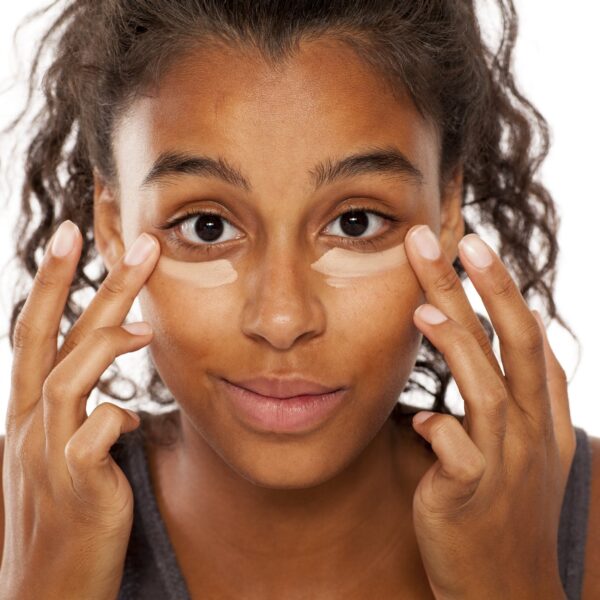
Concealer being applied over dark circles under the eye
Know your type

Which type is yours?

Tear trough hollowing

A groove and shadow beneath the eye

Tear trough hollowing

Volume loss creating a depression that casts a shadow. Pull the skin gently outward at the temple: if the shadow disappears, this is your cause. Filler placed deep and conservatively is the treatment, and it lifts the shadow beautifully.

Fat prolapse

A genuine bulge, worse in the morning

Fat prolapse

The fat pad cushioning the eye has pushed forward. It bulges rather than hollows, is often worse on waking and after salt or alcohol. Surgery is the definitive answer, and filling the hollow just beneath can blend a mild case.

Under-eye pigmentation

Genuine brown or grey colour

Under-eye pigmentation

Actual pigment rather than shadow, frequently hereditary and more common in deeper skin tones. Stretch the skin gently: if the colour stays, it is pigment. Treated with peels and pigment-focused care rather than volume.

Thin crepey skin

Fine crinkling, blue-purple tone

Thin crepey skin

The skin has thinned enough to show the vessels beneath and creases when you smile. Polynucleotides improve the quality of the tissue itself, which is exactly what this skin loves.

How we assess and treat

Under-eye assessment at Regents Park Aesthetics happens sitting upright in daylight rather than lying back under a treatment lamp, because daylight shows the under-eye exactly as everyone else sees it.

Two simple tests do most of the work. Gently stretching the skin outward tells us whether darkness is shadow or pigment: shadow disappears, pigment stays. Asking you to look up tells us whether a bulge is fat prolapse, since prolapsed fat becomes more prominent.

We ask about mornings, salt, alcohol and sleep, since fat prolapse and fluid retention both fluctuate while hollowing and pigment do not.

The under-eye rewards precision more than any other area, so the type always decides the treatment. Thin crepey skin is strengthened with polynucleotides, a fat bulge is tightened or referred for a surgical opinion, and a true hollow is softened with filler.

Your options

Which treatment for your type of under-eye concern?

As a guide, this is how we typically match each type to a treatment. Your own plan is always confirmed at consultation, and where a type is best treated by a surgeon, your clinician points you to the right door.

Type
Recommended treatment
Why
Tear trough hollowing
Filling the groove lifts the shadow that reads as a dark circle
Fat prolapse
Filling a bulge makes it worse, so the skin is tightened instead
Under-eye pigmentation
True pigment, so no amount of filler will change it
Thin crepey skin
Improves skin quality so the vessels beneath can show through less

Treatments that address it

Polynucleotides Often the best option under the eyes, because it adds no volume. It improves the quality of thin skin, so vessels can show through less and the area looks brighter. Tear Trough Filler Made for genuine hollowing. Placed deep, conservatively and by a prescribing clinician, using a soft product chosen for this delicate area. Plasma Non-Surgical Blepharoplasty Tightens loose lower lid skin without cutting. Ideal for crepiness and mild laxity. Seven to ten days of downtime. £650 for upper or lower lids. Chemical Peels For genuine under-eye pigmentation, using formulations chosen for the thinness of the skin. A course rather than a single treatment, alongside pigment-focused home care. From £120.
Polynucleotide treatment vials and syringe Practitioner injecting filler into the lips with a fine needle Practitioner applying a chemical peel mask with a brush
£320 £520 £650 £120
Thin crepey skin True hollowing Loose lower lid skin Pigmentation
No Yes No No
Very low Puffiness, grey tinge Low Low
3, monthly 1, topped up 9 to 12 months 1 to 2 4 to 6
24 hours 48 hours 7 to 10 days 24 to 48 hours

Before and after

Face before a course of polynucleotides, with red, thin and irritated looking skin under both eyes
Before
The same face after a course of polynucleotides, the under eye skin calmer and thicker looking
After
Under-eye skin
After polynucleotides

Thin, crepey under-eye skin treated for quality rather than volume. Clinical image supplied by Allergan Aesthetics. Individual results may vary.

Three quarter view before tear trough filler, with a shadowed hollow beneath the eye
Before
The same face after tear trough filler, the hollow filled and the shadow lifted
After
Under-eye hollow
After filler

Shadowing cast by a hollow rather than by pigment. Clinical image supplied by Allergan Aesthetics. Individual results may vary.

Can you treat it at home?

Sleep, salt and alcohol genuinely affect the appearance of the under-eye, and they affect fluid rather than structure. If your bags are worse on Monday morning, a fluid component is part of the picture, and a few simple habits help it.

Sun protection prevents further thinning and further pigment. Under-eye skin is thin and exposed, so take sunscreen right up to the lash line.

Caffeine-containing eye creams cause brief vasoconstriction and a temporary tightening. Retinol used cautiously and at low strength can improve skin quality over months, so introduce it slowly, as this skin is delicate. Vitamin C and niacinamide help pigmentation too.

Hollows and prolapsed fat are structural, so they are treated in clinic, and hereditary pigmentation responds best to peels. The most effective free intervention for most people is a consistent sleep pattern, which brightens the under-eye more than any cream.

Eye cream being tapped under the eye with a fingertip
Questions, answered

Frequently Asked Questions

Four different things: hollowing that casts a shadow, prolapsed fat, genuine pigmentation, and thin skin showing the vessels beneath. Most people have a combination, and each has its own treatment.

Stretch the skin gently outward. If the darkness disappears it is shadow from hollowing. If the colour stays it is pigment. Look up in a mirror: if a bulge becomes more prominent, that is fat prolapse.

When the cause is hollowing, where it lifts the shadow beautifully. Thin crepey skin does best with polynucleotides and a fat bulge with tightening or a surgical opinion, so matching the treatment to the cause is the key.

It depends on whether the bag is fat or hollow. Genuine fat prolapse has its definitive result with surgery. Loose lower lid skin responds to plasma blepharoplasty. Hollowing responds to filler.

This is where they are strongest. They add no volume, and they improve the quality of the thin skin that lets vessels show through.

Polynucleotides £320 per area over three sessions, tear trough filler £520, plasma blepharoplasty £650, peels from £120. We quote a plan at consultation rather than a single treatment.

It is one of the most technically demanding areas in aesthetics, which is why Regents Park Aesthetics keeps it with experienced prescribing clinicians, with a dissolving agent on site. Done well it is excellent.

Yes, because we use hyaluronic acid only. It can be dissolved within days if you would like to change the result.

Fluid. Lying flat overnight allows fluid to settle in the area, and salt and alcohol the night before make it more pronounced. If yours fluctuate substantially, a fluid component is part of the picture, and a few simple habits help.

They help the skin itself. Caffeine causes brief tightening, retinol improves skin quality over months, and vitamin C and niacinamide help pigment. Hollows and fat are treated in clinic.

It can deepen hollowing by reducing the small amount of fat in the area, which is when a little filler restores the balance.

For genuine, prominent fat prolapse, surgical blepharoplasty is the definitive answer and your clinician refers you. For loose skin without a fat bulge, non-surgical options do well.

Visit our Wimpole Street clinic

Let’s talk about your skin.

A consultation is the first step towards a plan that feels right for you.

Address19 Wimpole Street, London W1G 8GE
Telephone020 7580 4813