


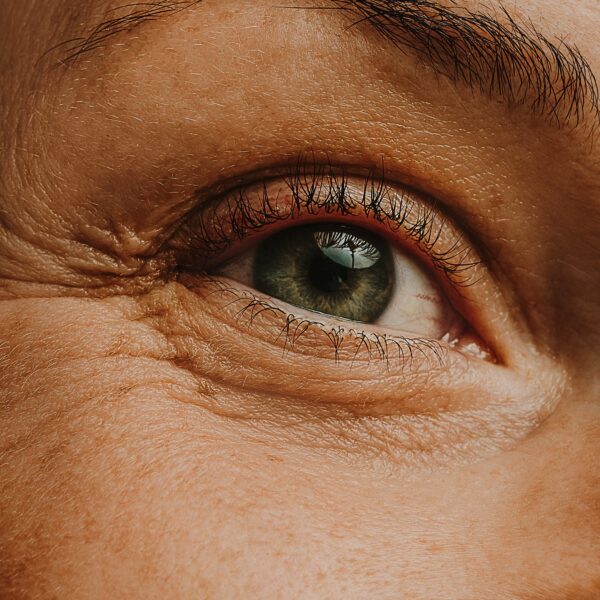

Loose skin resting on the lash line
Skin laxity
The most common cause and the one plasma treatment addresses well. Skin is tightened without cutting, with results lasting two to three years.
Explore skin
Care starts with your skin, not a treatment name.
Explore injectables
A medical consultation and an individual approach.
Explore face & body
Explore options for contour, muscle and firmness.
Explore concerns
You do not need to know the treatment. Tell us your concern.

Explore skin
Care starts with your skin, not a treatment name.
Explore injectables
A medical consultation and an individual approach.
Explore face & body
Explore options for contour, muscle and firmness.
Explore concerns
You do not need to know the treatment. Tell us your concern.

Eyeshadow that vanishes into the fold by lunchtime, a lid that feels heavier in photographs. Hooding comes from skin, fat or a brow that has dropped, and a close look at Wimpole Street tells you which, so the treatment matches the cause.
A hooded upper lid is skin resting on or over the lash line. Eyeshadow disappears into the fold, eyeliner smudges upward, and people ask whether you are tired.
Three things cause it, sometimes together.
Excess or lax skin is the most common and the one that responds best to non-surgical treatment. Fat prolapse, where the fat pad pushes forward, creates a fullness that surgical blepharoplasty addresses best. And brow descent means the whole brow has dropped, taking the lid with it, so lifting the brow is what opens the eye.
Some hooding is simply anatomical and has been there since your twenties, and refining it is a lovely conversation of its own.
Where surgery would serve you better, your clinician will talk you through that at the consultation.
Loose skin resting on the lash line
The most common cause and the one plasma treatment addresses well. Skin is tightened without cutting, with results lasting two to three years.

Fullness and puffiness rather than a fold
The fat pad pushing forward. Surgical blepharoplasty is the answer here, because it repositions the fat that plasma leaves in place.

The whole brow sits lower than it did
Where the brow has dropped and taken the lid with it. A brow lift with anti-wrinkle injections gently raises the tail, and a surgical brow lift suits more significant descent.

Present since your twenties
Simply how your lid is built rather than a change. It refines beautifully, and your clinician will show you what a natural refinement looks like.
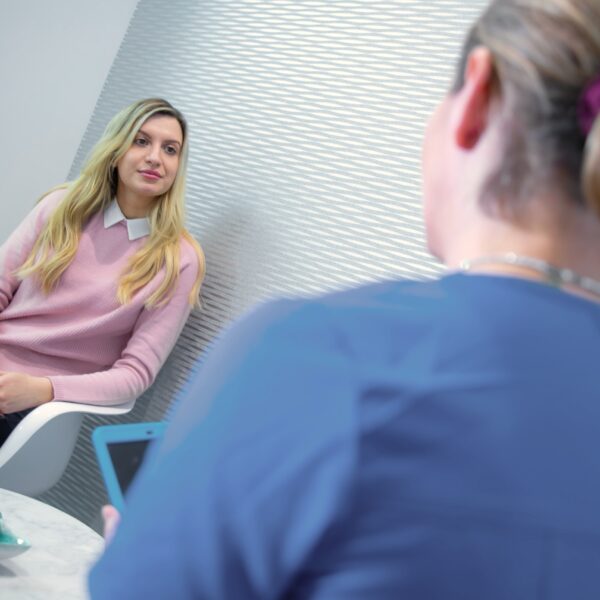
Your clinician looks at the lid at rest, with the brow relaxed in its natural position, because most people lift their brows a little when being examined and that hides the hooding entirely.
We press gently to establish whether the fullness is skin or fat. Skin folds and moves. Prolapsed fat is firm and becomes more prominent when you look up.
We check brow position, because when the brow has dropped, lifting it is what gives the result you are picturing.
And where surgery would serve you better, your clinician will say so and point you to the right surgeon.
As a guide, this is how we typically match each type to a treatment. Your own plan is always confirmed at consultation, and where a surgeon would serve you better, your clinician refers you.
| Plasma Blepharoplasty A grid of plasma points sublimates microscopic amounts of excess lid skin, tightening it without cutting. Local anaesthetic only, seven to ten days of downtime, results lasting two | Brow Lift Injections A small amount placed to release the muscles pulling the brow down, gently raising the tail and opening the eye. Subtle, and lovely where brow descent is part of the pi | |
|---|---|---|
 |
 |
|
| £650 | £180 | |
| Explore Plasma Blepharoplasty | Explore Brow Lift Injections |
A hooded lid lifts in clinic rather than at home, whatever the eye cream market suggests, though a few habits help it look its best.
A gentle retinoid just below the brow thickens skin over months for a subtle improvement. The lid is the thinnest skin on the body, so a light touch is the way.
Sleeping propped up reduces morning fluid that exaggerates the appearance.
Makeup technique is a real secret weapon. Placing shadow above the crease rather than in it, and keeping liner thin, changes how hooding reads considerably.
Leave at-home eyelid tightening devices on the shelf: the lid deserves a clinician’s hands.
Excess or lax lid skin, fat prolapse, or the brow descending and taking the lid with it. Sometimes it is simply anatomical and has been there since your twenties.
Hooding caused by loose skin. Plasma treatment tightens the lid without cutting, with results lasting two to three years. Fat prolapse and significant brow descent are best treated surgically.
£650 for upper or lower lids, £1,099 for both together. Brow lift injections from £180.
Seven to ten days for plasma. Swelling is significant on days two and three and small crusts sit on the area for about a week.
Two to three years. Ageing carries on gently, so a top-up keeps the lid fresh.
They do different jobs. Surgery removes skin and repositions fat and lasts ten years or more. Plasma tightens moderate laxity, avoids a scalpel and general anaesthetic, and lasts two to three years.
Where the fullness is fat rather than skin, or the hooding is more significant, and your clinician will talk you through a surgical referral at the consultation.
They gently raise the brow tail by releasing the muscles pulling it down, which opens the eye. It is a subtle lift, and plasma takes care of the lid skin itself.
A gentle retinoid just below the brow thickens skin over months, and clever makeup placement does the rest. The lift itself comes from treatment in clinic.
Your clinician assesses deeper skin tones carefully, since plasma can leave temporary pigmentation there, and talks through the best plan for your skin at the consultation.
One produces visible improvement. Two, twelve weeks apart, produce the result most patients are picturing.
A medically led clinic where every plan starts with an assessment and every injectable is placed by a medical professional, so the result looks like you on your best day.
Tell us what you’d like to achieve. Regents Park Aesthetics will be in touch within one working day to arrange your consultation.