

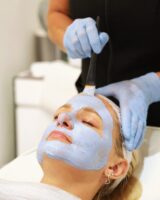
You have a friend’s birthday dinner on Saturday and the brief sounds simple: fresher skin, a smoother finish, a little more life in the mirror. Then the treatment menu arrives. Chemical peel or HydraFacial? For cleansing, congestion and hydration, HydraFacial may be a beautiful fit. For a particular surface concern, a carefully chosen peel may be the star. The fun part is discovering which one matches what you would like to change.
Start with what you would love your skin to do
Wanting foundation to sit more comfortably and wanting a persistent patch of pigment assessed are two different wishes. Both can lead you to search for a better facial, and each deserves its own conversation.
Try describing the change you would like without naming a treatment. Perhaps your nose feels congested even after cleansing. Perhaps your cheeks look uneven in daylight. Or perhaps you simply love a facial and would like a professional opinion before trying something new. Each is a perfectly good starting point.
Bring that description to your appointment. A great plan makes sense in one sentence: this is the concern, this is what we can improve, and this is how we will judge it.
HydraFacial brings several steps together
HydraFacial at RPA combines cleansing and exfoliation with suction-based extraction and hydrating serums. That is its charm: several surface skincare tasks brought together in one structured, enjoyable facial.
Ask which version you are booking and what is included, because treatment names can sound similar while the length and additional steps differ. The best choice is the one that matches your skin rather than the longest menu.
Hydration-focused does not mean entirely passive, since exfoliation and extraction are active parts of the treatment. Redness, tenderness or mild flaking can occur, so mention it if your skin currently stings with ordinary skincare and your practitioner can adapt the appointment.
A chemical peel is a whole family of treatments
The name covers a range of formulations and depths. A light superficial peel and a deeper resurfacing procedure are very different appointments, with their own purpose, preparation and recovery. Mayo Clinic’s peel overview explains that distinction.
So the most helpful question is “Which peel would you recommend for me, and why?” rather than “Are peels strong?” Ask for the exact name, the concern it is designed to address and how your skin may look and feel afterwards.
RPA offers skin peels in London, including superficial options. In London the Perfect Peel is £300, with acne or derma boosters at £399. Think of a peel and a HydraFacial as different choices rather than a ladder you need to climb.
Brighter skin and fewer blocked pores?
There is some overlap in why people consider these treatments, and neither is universally better. Your current routine, sensitivity and previous response to exfoliation all help shape the right choice.
If you have tried several active products recently, bring their names along, including anything you use only occasionally, such as an exfoliating mask before a night out. That way your consultation is about the routine your skin is actually experiencing.
Persistent inflamed spots or redness are lovely to raise at the consultation, so the plan starts in exactly the right place. Sometimes the most valuable part of a visit is learning which question to answer first.
Put recovery beside the price
Ask what “back to normal” means for your chosen treatment. Able to work, comfortable without make-up and ready for a close-up photograph are three different expectations.
Skin can look a little pink or flaky for a while after a peel, and the American Academy of Dermatology’s recovery guidance explains that aftercare changes with peel depth, and your own instructions will come from the product used on you.
For either option, mention an approaching event before booking, with the actual date and whether you have had the treatment before. A plan with a little flexibility lets you enjoy the run-up to the day.
Why choose a clinic that helps you choose?
RPA is medically led, with aesthetic nurse Kay Greveson as clinical director. That gives you accountable care from the first conversation, with every appointment tailored to your skin. Ask who will assess and treat you, how they will adapt the appointment and who you can contact afterwards.
At our London clinic, your consultation can start with your concern and include both a peel and a HydraFacial discussion. There is no need to buy both to make that conversation worthwhile.
Contact our Wimpole Street team, a short walk from Bond Street and Oxford Circus stations, to talk about your skin and the time you have available. Bring your skincare list and one clear wish. That is a lovely place to begin.
Your questions, answered
RPA’s HydraFacial description includes acid exfoliation. It is still different from a separately selected chemical peel, because the formulation, application and the rest of the appointment all matter.
Ask your practitioner first. They will assess the combined exfoliation and explain whether spacing the treatments would suit your skin better.
Indented scars deserve a dedicated scar assessment, where each treatment finds its own role. Microneedling may be discussed for selected scars after assessment.
Not necessarily. Visible flaking varies with the peel and your response, so ask what to expect from the exact option recommended for you.
Start by agreeing the aim, the number of appointments and a review point. A course is much easier to enjoy when you know what improvement to look forward to and how the plan can adapt along the way.

