



Jawline, chin and neck, cyclical
Hormonal acne
Deep, tender lesions along the lower face that flare before a period. Your clinician talks through the wider picture, including your cycle, at the consultation, and the skin plan is built around it.
Explore skin
Care starts with your skin, not a treatment name.
Explore injectables
A medical consultation and an individual approach.
Explore face & body
Explore options for contour, muscle and firmness.
Explore concerns
You do not need to know the treatment. Tell us your concern.

Explore skin
Care starts with your skin, not a treatment name.
Explore injectables
A medical consultation and an individual approach.
Explore face & body
Explore options for contour, muscle and firmness.
Explore concerns
You do not need to know the treatment. Tell us your concern.
Skin concerns · London
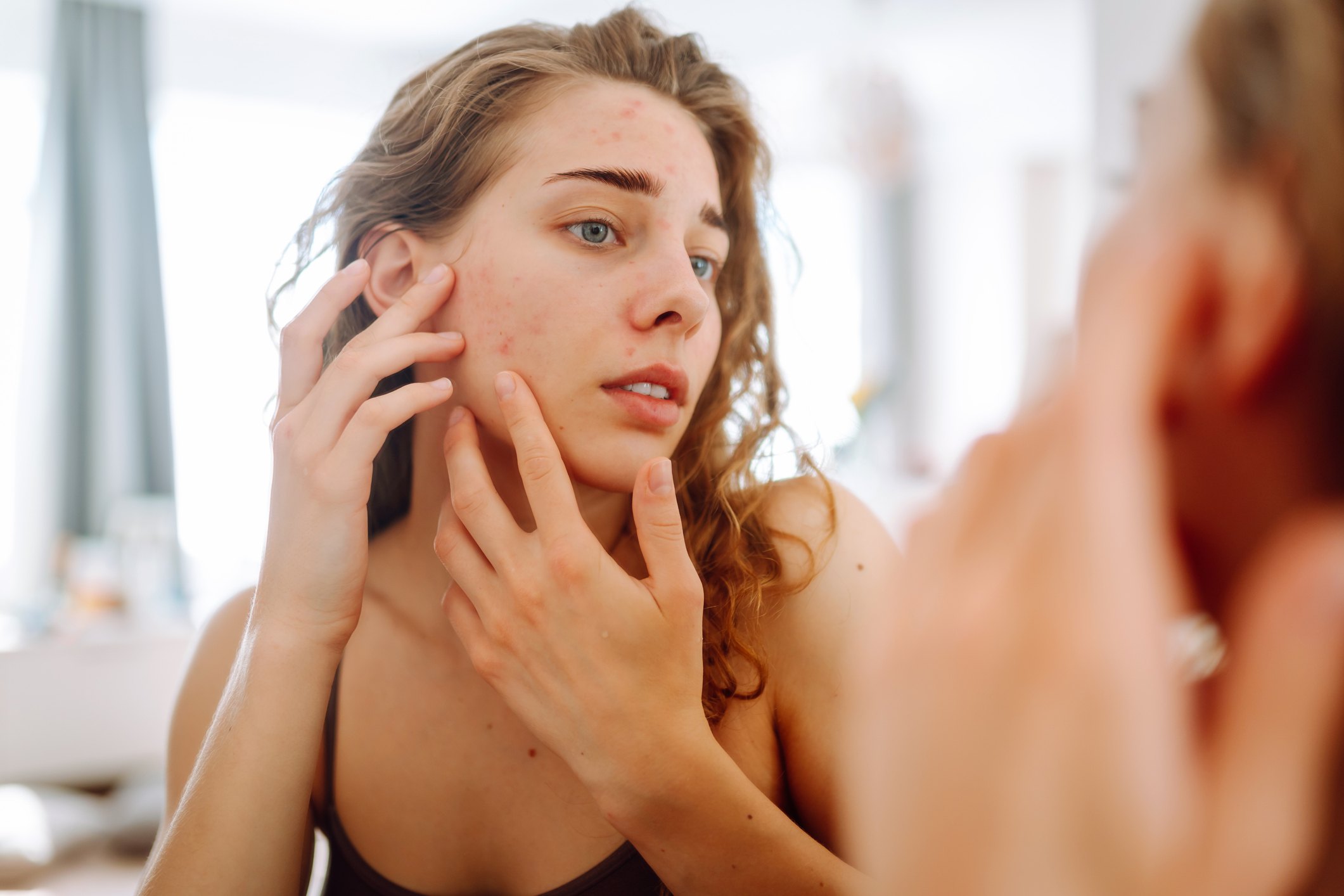
Acne in your thirties behaves differently from acne at fifteen, and it calls for a gentler, smarter plan. Treat the cause as well as the spots, and adult skin calms beautifully.
Adult acne is its own condition, quite distinct from teenage acne. It sits lower on the face, along the jaw, chin and neck rather than across the forehead and nose. It produces deeper, more painful lesions that last longer and scar more readily. And it is far more likely to be hormonally driven.
That last point is the one that changes everything. Acne appearing or worsening in the week before a period, sitting along the jawline, points toward a hormonal driver. Your clinician talks through the wider picture with you, including your cycle. Treating the driver alongside the skin gives the clearest result.
Adult skin also loves a gentler routine. It is thinner and produces less oil than teenage skin, so barrier-friendly care, planned with your clinician, helps keep it calm.
Regents Park Aesthetics identifies which type you have and treats accordingly. Peels, LED and skincare run at our Wimpole Street clinic, a few minutes from Bond Street station.
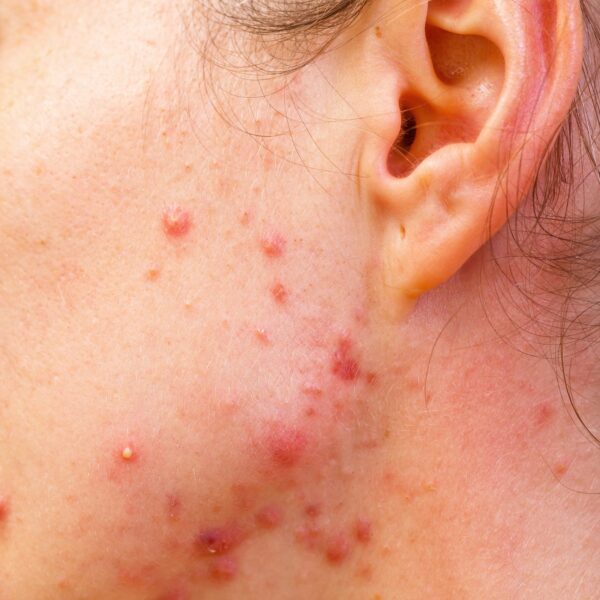
Jawline, chin and neck, cyclical
Deep, tender lesions along the lower face that flare before a period. Your clinician talks through the wider picture, including your cycle, at the consultation, and the skin plan is built around it.
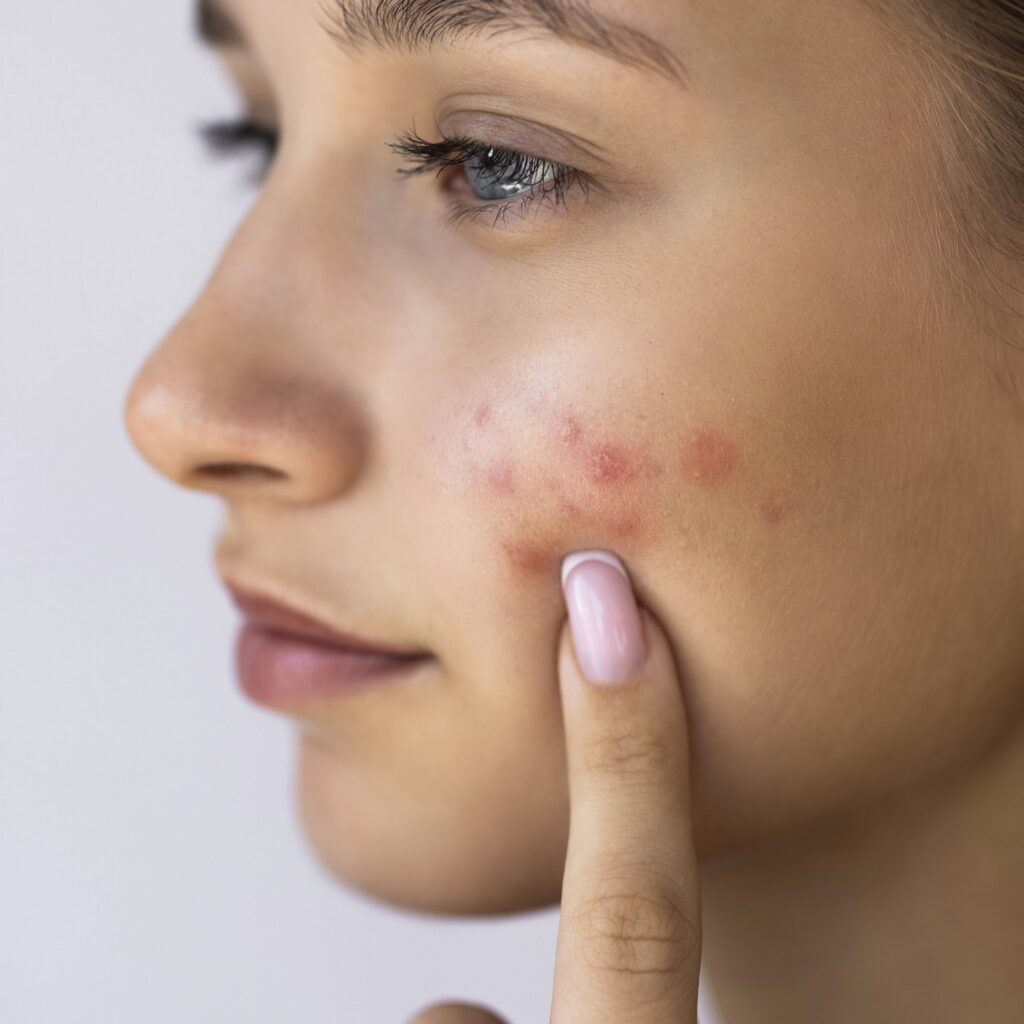
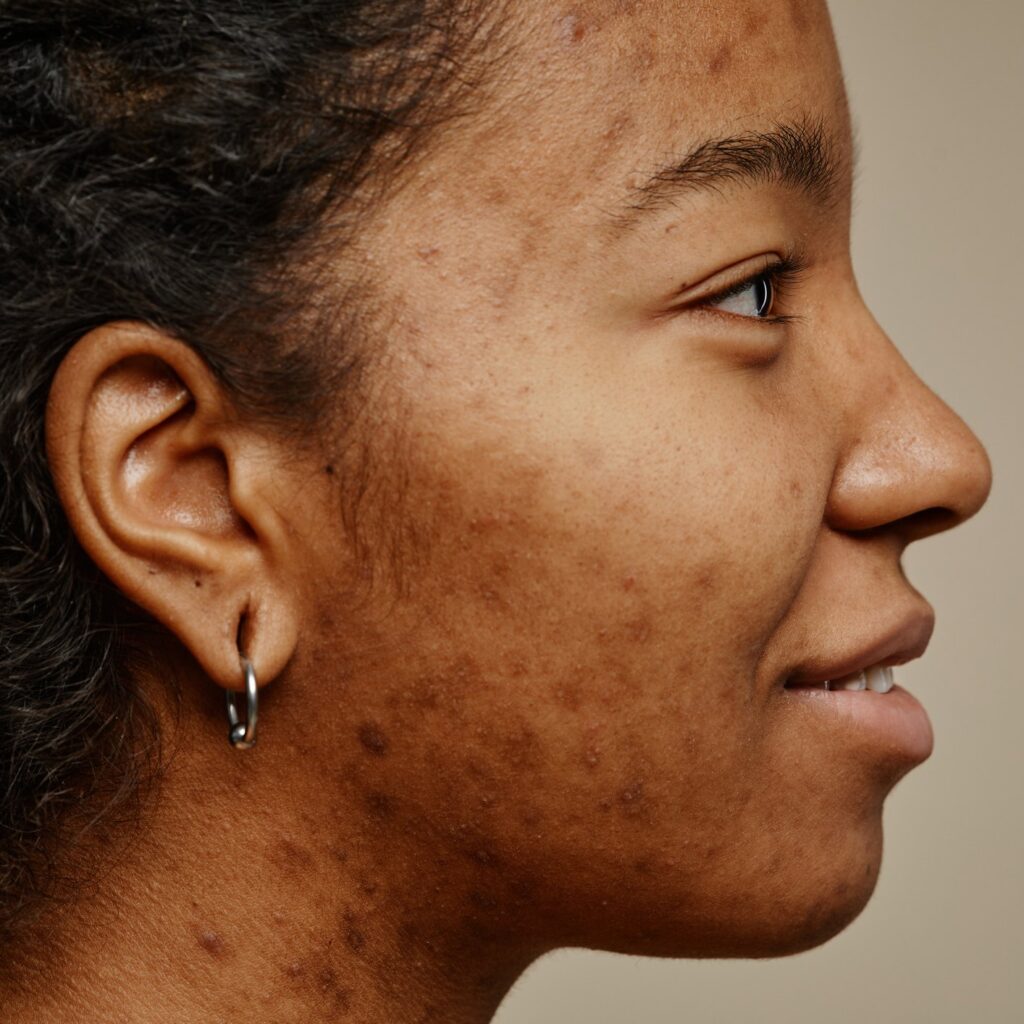
Red, painful papules and pustules
Actively inflamed lesions rather than blackheads. Peels and LED help calm active inflammation across a course, planned around your skin on the day.
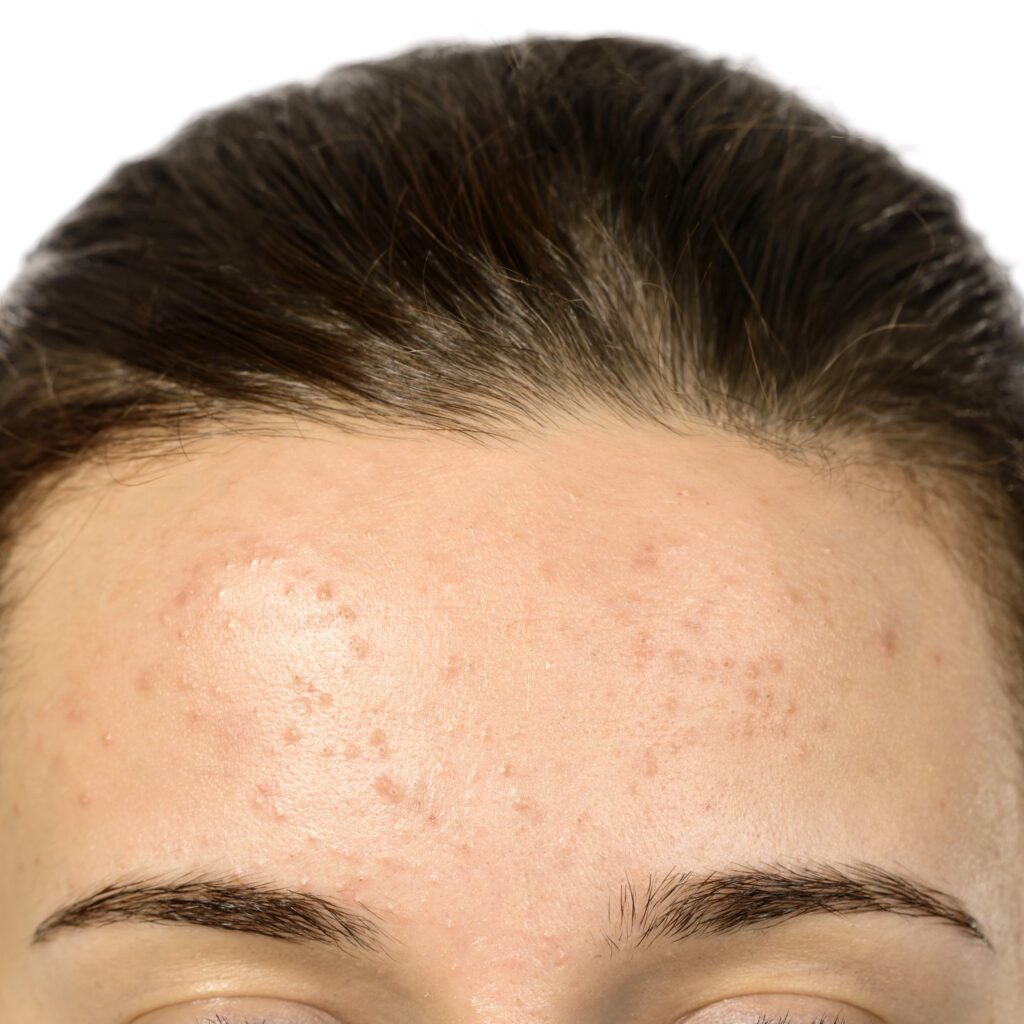
Blackheads, whiteheads, bumpy texture
Blocked follicles without much inflammation, often across the forehead and chin, leaving skin that feels rough. Responds well to salicylic peels, extraction and a consistent routine.
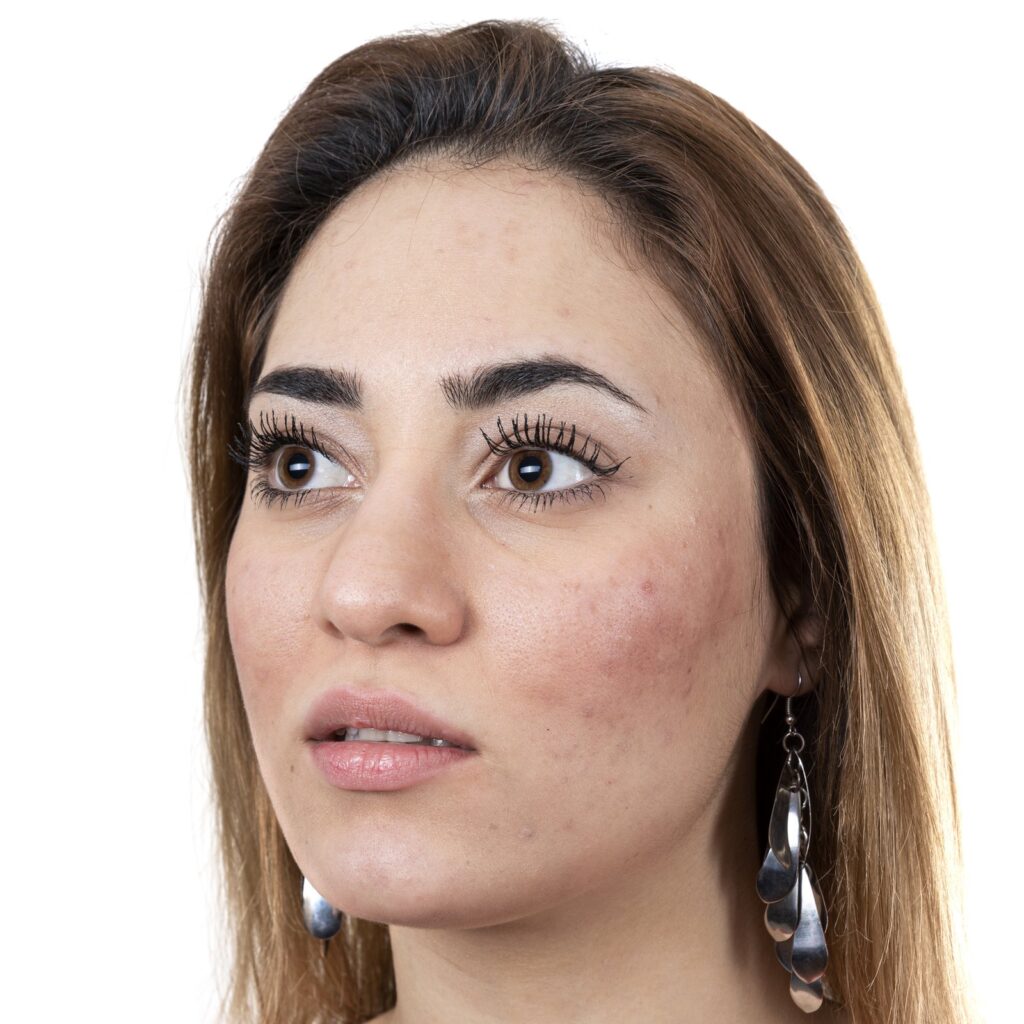
Uniform itchy bumps, often chest and back
A separate condition that looks like acne. Caused by yeast overgrowth in the follicle, producing uniform itchy bumps, and it needs a different approach from acne, which is why spotting it matters.
Assessment at Regents Park Aesthetics starts by establishing the type. Comedonal, inflammatory, hormonal and fungal acne each have their own treatment, and the last of those is a separate condition altogether.
We ask about timing across the cycle, about cycle regularity, and about unwanted facial hair, because those three questions together identify most hormonal cases. Where the pattern suggests a hormonal driver, your clinician talks you through the next step, and the skin work runs alongside it for the clearest result.
We also ask what you are currently using, and often simplify it. A pared-back routine on a happy barrier improves things before any clinic treatment starts.
Order matters. Active acne is calmed first and scarring treated next, because resurfacing works best on settled skin. Your clinician maps both phases with you, so you can see the whole journey from the first appointment.
For severe acne, your clinician points you to the right door, then picks up the skin work alongside.
As a guide, this is how we typically match each type to a treatment. Your own plan is always confirmed at consultation, and where a type is best seen by a dermatologist, your clinician points you to the right door.
| Chemical Peels Salicylic-based formulations are oil-soluble and get into the pore, treating active acne and the pigment marks it leaves in the same course, including The Perfect Peel with acne booster. | Dermalux LED Blue light targets acne bacteria and red light reduces inflammation, with no heat and minimal downtime. Gentle enough to use through a flare, and lovely for reactive skin. | HydraFacial Vacuum extraction clears congestion gently, with no squeezing, so skin stays calm and unmarked. Ideal for comedonal acne and congestion. | |
|---|---|---|---|
 |
 |
 |
|
| £120 | On consultation | £105 | |
| Comedonal, congestion, marks | Inflammation, redness | Moderate to severe acne | |
| Somewhat | Yes | Yes | |
| Somewhat | No | Yes | |
| Yes | Somewhat | No | |
| 24 to 48 hours | None | None | |
| Explore Chemical Peels | Explore Dermalux LED | Explore HydraFacial |
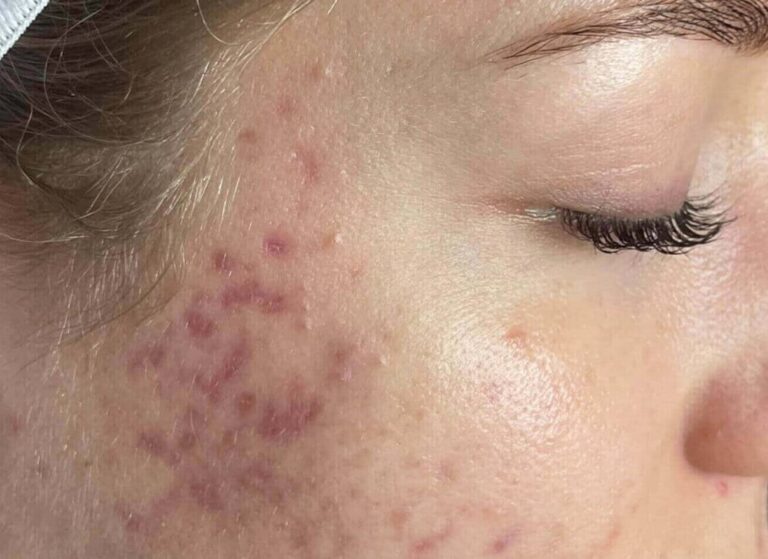

Active breakouts settling over a course of microneedling. Clinical image supplied by Crown Aesthetics. Individual results may vary.


Five clarifying HydraFacial treatments with the Murad Clarifying booster and Blue LED, photographed at The Glow Aesthetics. Clinical image supplied by Hydrafacial. Individual results may vary.
Be kind to the barrier. Gentle cleansing is the single biggest change in adult acne, because foaming cleansers, alcohol toners, physical scrubs and harsh actives strip the barrier and a stripped barrier stays inflamed. Skin that feels comfortable after cleansing, never tight, is skin that is ready to heal.
What earns its place. Niacinamide for the barrier, salicylic acid used sparingly rather than everywhere, and any prescription creams discussed with your clinician.
Non-comedogenic sunscreen daily, because acne treatment increases sensitivity and post-inflammatory marks darken with sun.
On diet, there is real evidence for high-glycaemic foods and for skimmed milk specifically. Cutting back is worth a trial, as one part of a wider plan.
And the hardest habit to break: hands off. A spot left alone has the best chance of healing cleanly, while squeezing pushes inflammation deeper and leaves marks that last for months.
Adult acne is usually hormonally driven and behaves differently from teenage acne. It sits along the jaw, chin and neck, produces deeper and more painful lesions, and scars more readily. Stress, some medications and skincare that damages the barrier all contribute.
Acne driven by androgen influence on the oil glands, typically flaring in the week before a period and sitting along the lower face. Where it comes with irregular cycles or unwanted facial hair, your clinician talks through the wider picture with you.
From both ends at once. The wider picture is considered alongside the skin, which is treated with peels, LED and a barrier-respecting routine.
A gentle non-foaming cleanser, niacinamide, a non-comedogenic sunscreen and any prescription creams your clinician discusses with you. Gentle always beats stripping on adult skin.
Bring them to your consultation. Your clinician looks at what you use and often simplifies it, so the routine protects the barrier.
There is real evidence for high-glycaemic foods and skimmed milk specifically. Cutting back is worth a trial, as one part of a wider plan, since most adult acne has other drivers too.
Peels run through both phases and help the marks from the start. Deeper scar resurfacing follows once active acne is calm, because settled skin rebuilds best.
Your clinician explains what to expect for your skin, and progress is reviewed across the course.
Your clinician talks this through at your consultation and helps you plan clinic treatment around any care you already have.
That may be fungal folliculitis rather than acne, which is common on the chest and back. It needs a different approach from acne, which is exactly why the distinction is worth making.
LED and gentle peels, yes. Stronger peels usually wait until the flare has settled slightly. We work around where your skin is on the day rather than to a fixed protocol.
A consultation is the first step towards a plan that feels right for you.
Tell us what you’d like to achieve. Regents Park Aesthetics will be in touch within one working day to arrange your consultation.