






Face
Hooded Eyes
The favourite request, for an upper lid that has begun to rest on the lash line.
Explore skin
Care starts with your skin, not a treatment name.
Explore injectables
A medical consultation and an individual approach.
Explore face & body
Explore options for contour, muscle and firmness.
Explore concerns
You do not need to know the treatment. Tell us your concern.

Explore skin
Care starts with your skin, not a treatment name.
Explore injectables
A medical consultation and an individual approach.
Explore face & body
Explore options for contour, muscle and firmness.
Explore concerns
You do not need to know the treatment. Tell us your concern.
Eyelid tightening without surgery
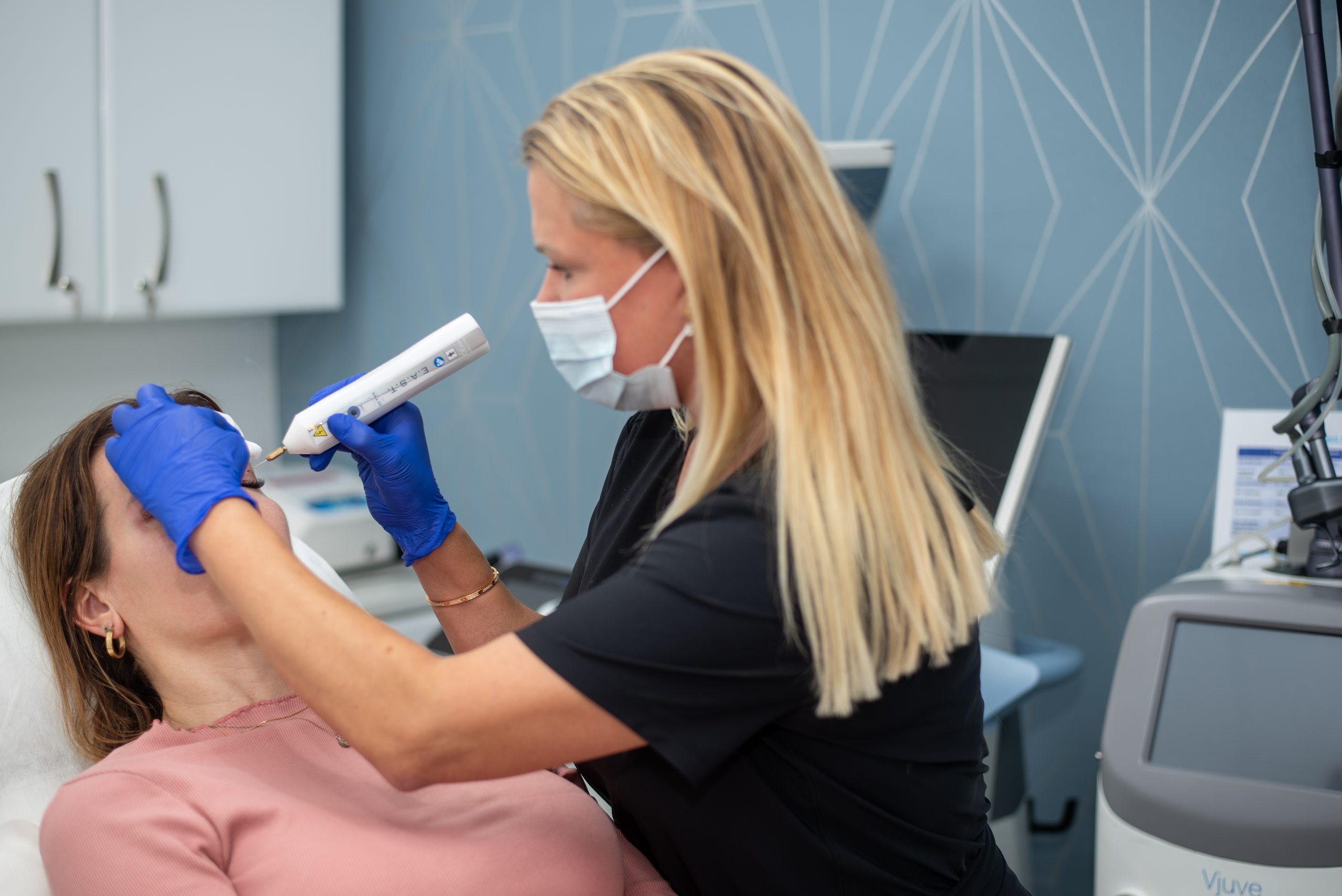
Eyeshadow creasing into a fold that was not there last year? On Wimpole Street a plasma device tightens hooded upper lids with a local anaesthetic, no scalpel and no stitches, and about a week of recovery. From £650 for upper or lower lids.
per treatment
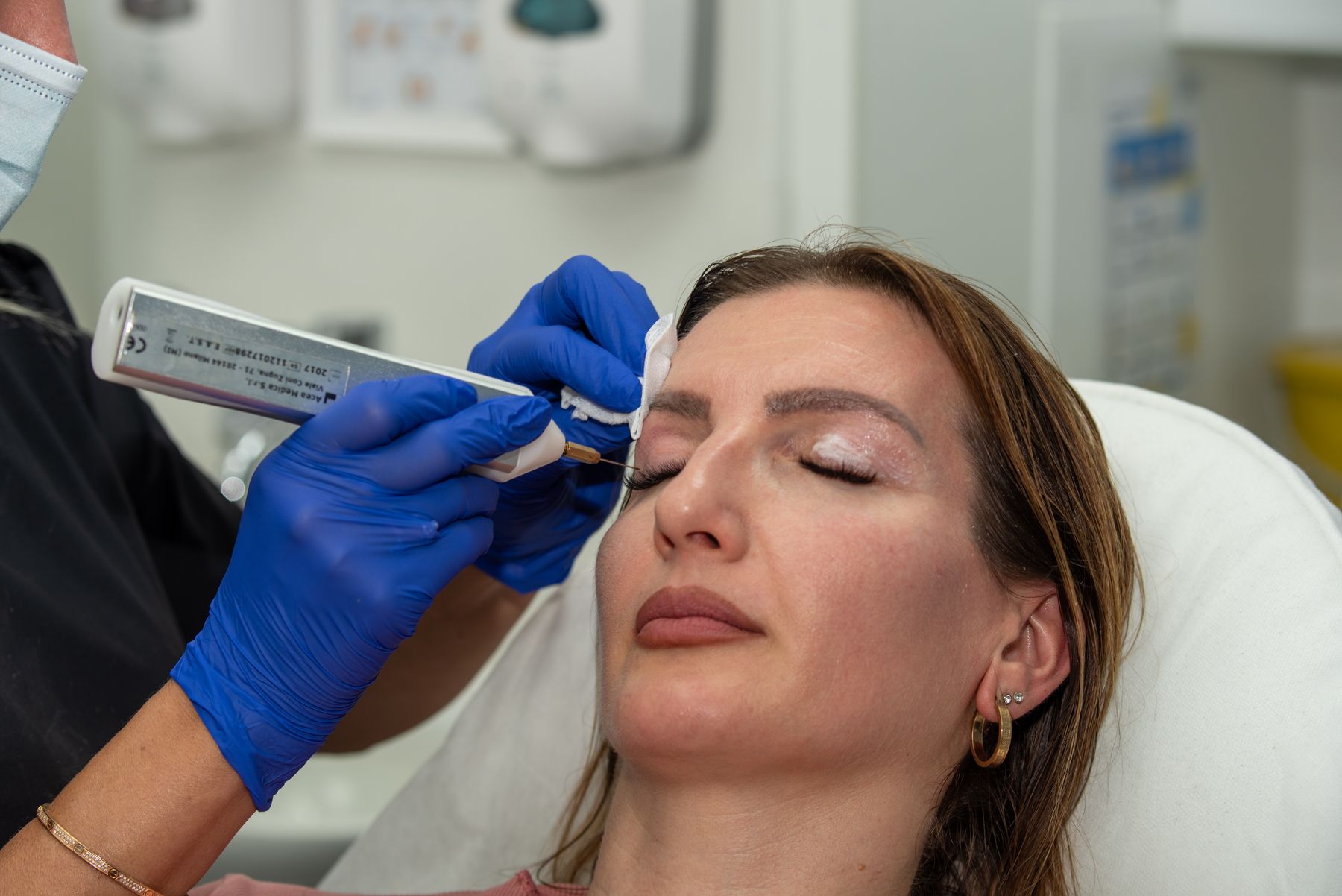
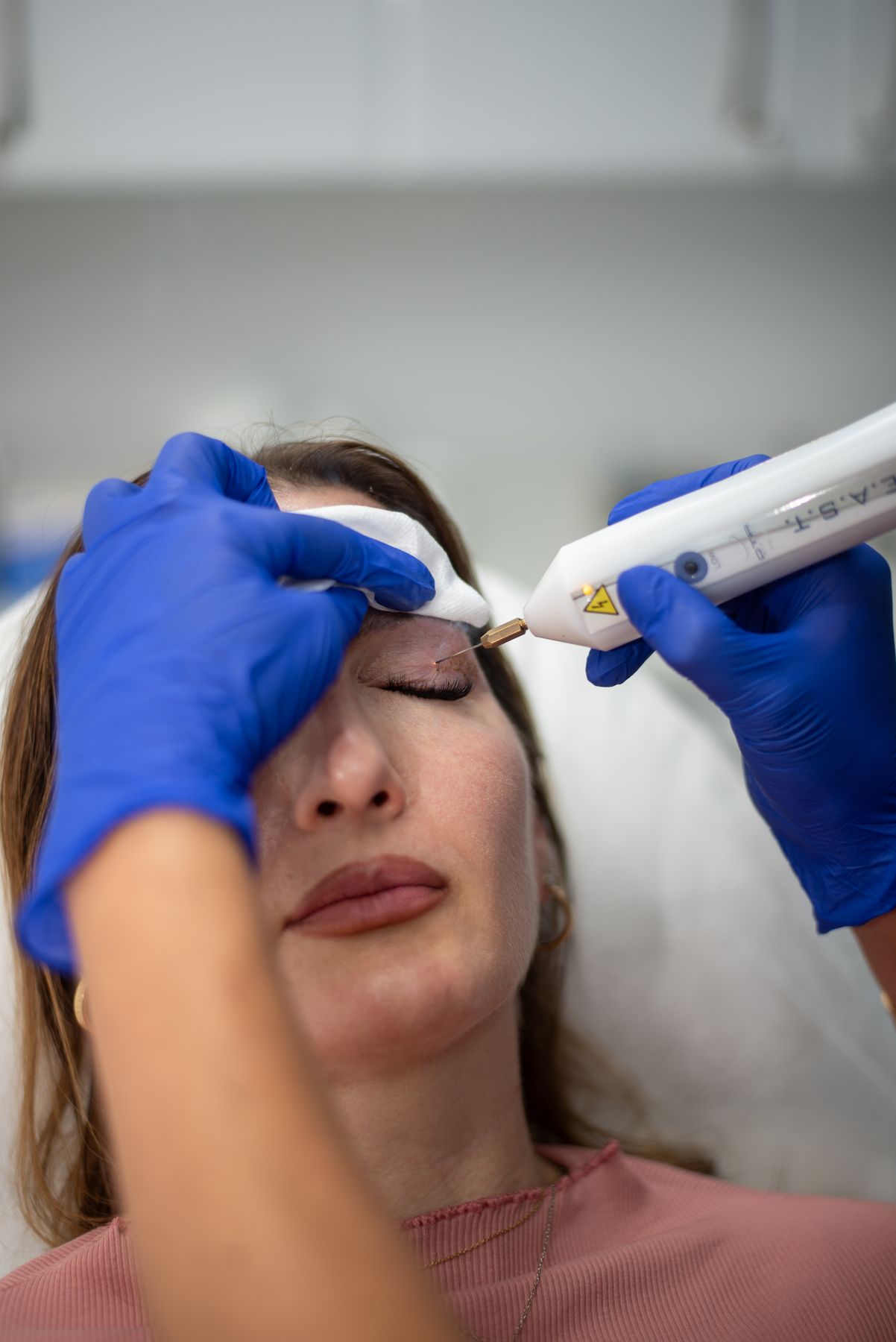
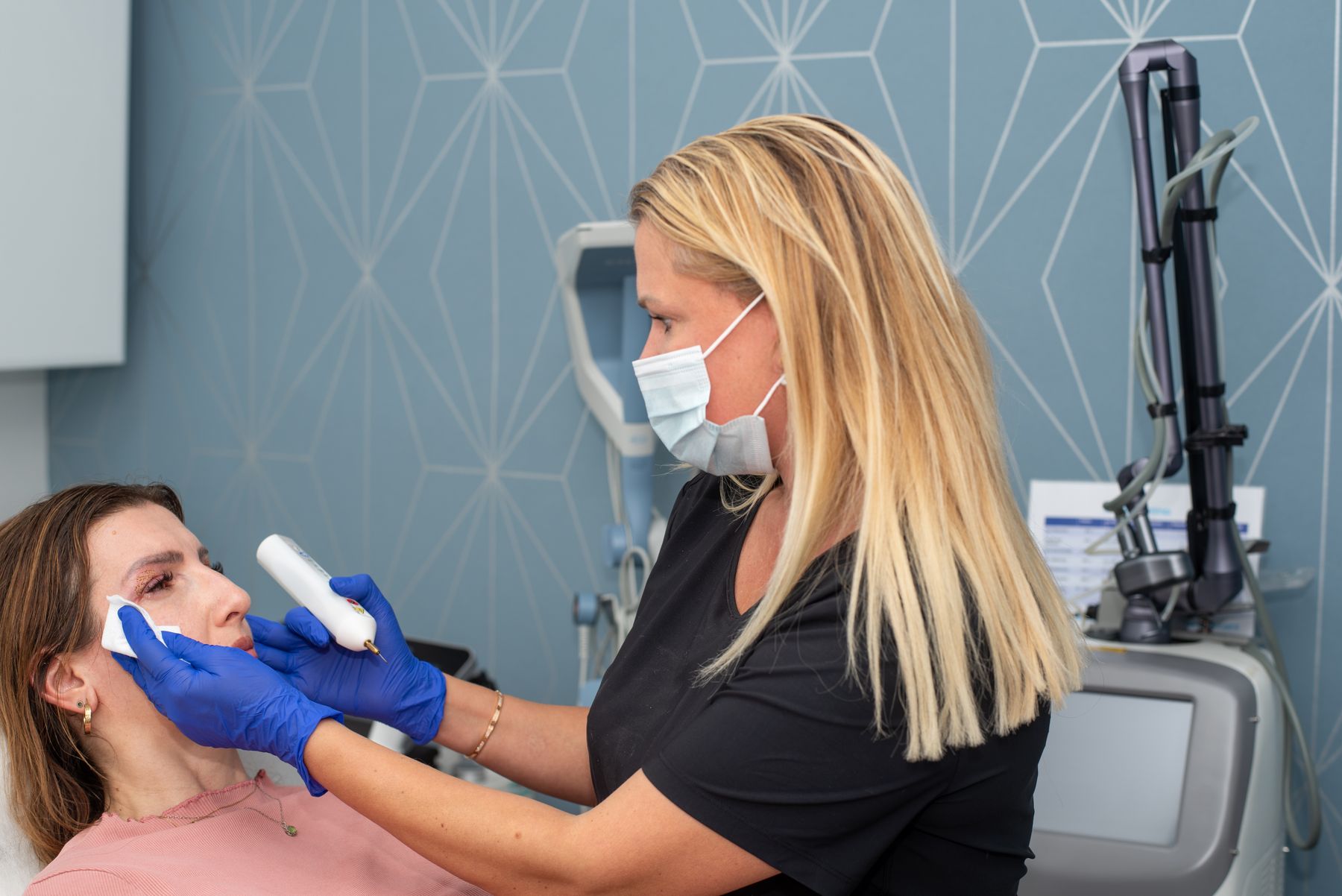
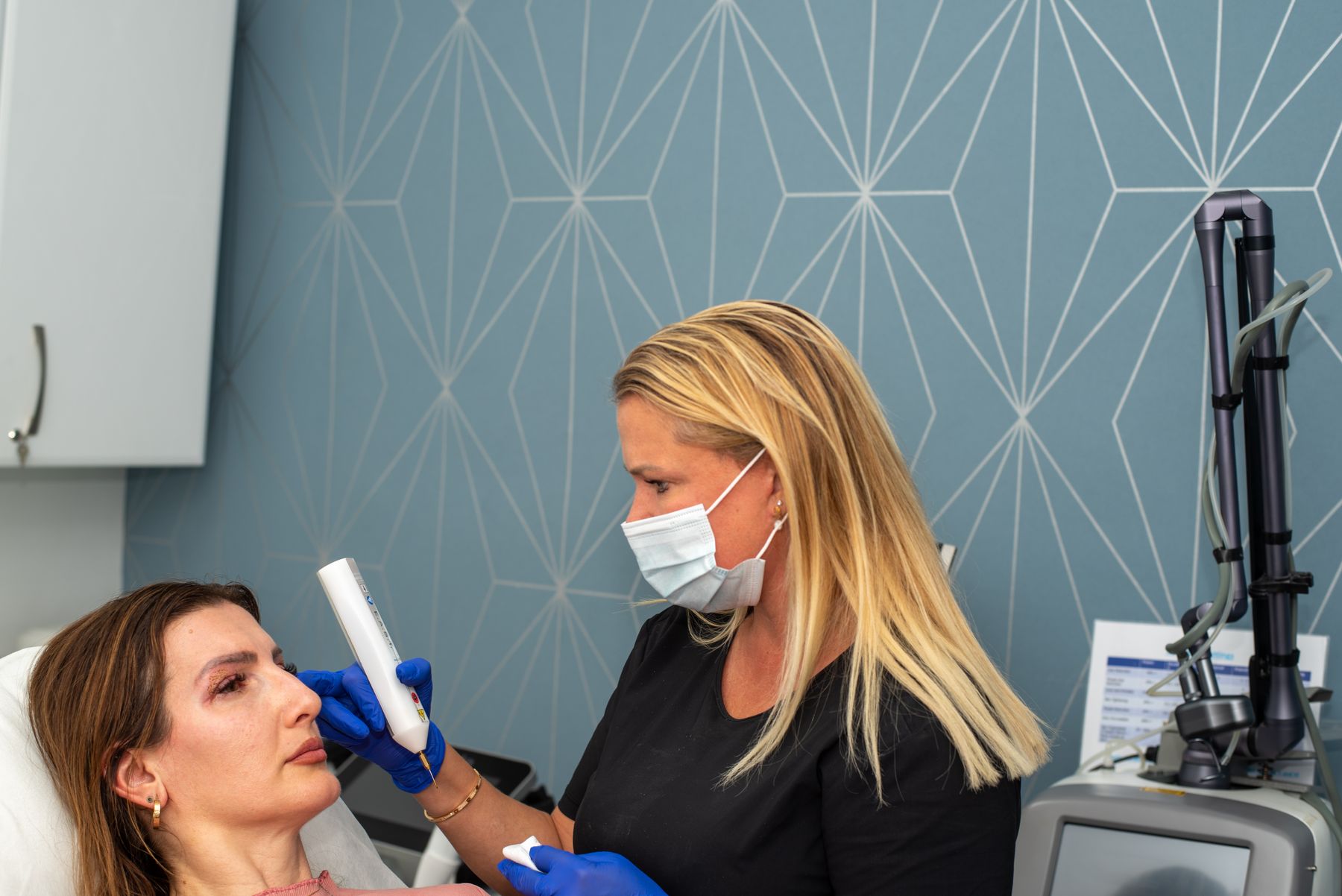
You notice it in a holiday photo first: the lids look heavier than you feel. A fine probe hovers just above the skin, the gap ionises into plasma, and that arc of energy turns a microscopic point of the surface layer directly to vapour. A grid of those points lifts and contracts the lid straight away, and the healing response lays down new collagen that tightens it further over the following months.
Face
The favourite request, for an upper lid that has begun to rest on the lash line.

Face
Crepey lower lid skin, treated with an extra gentle touch where the skin has gone crepey.
Skin
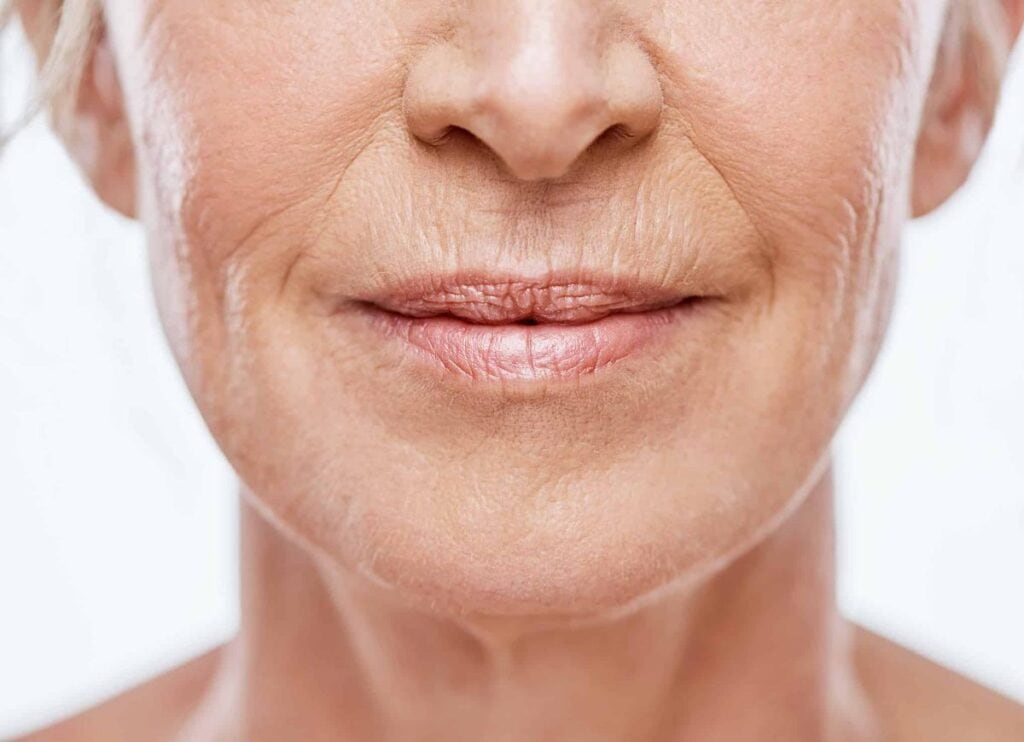
The same plasma grid is used on crepey skin elsewhere on the face.
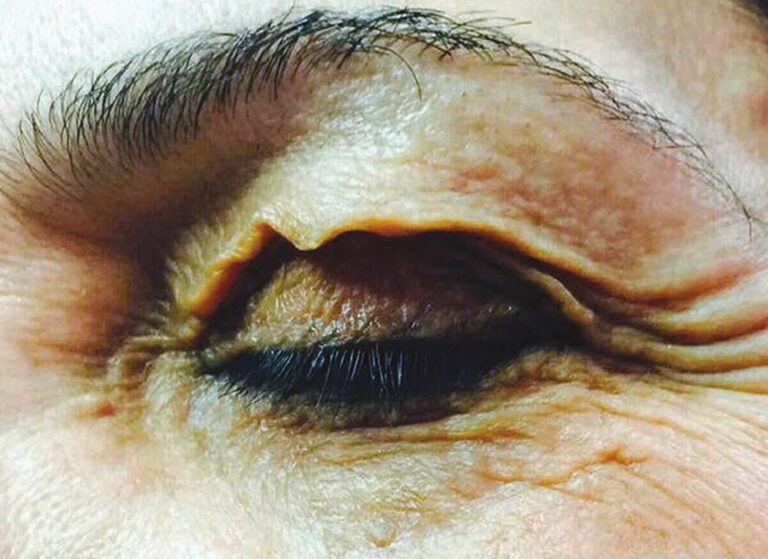
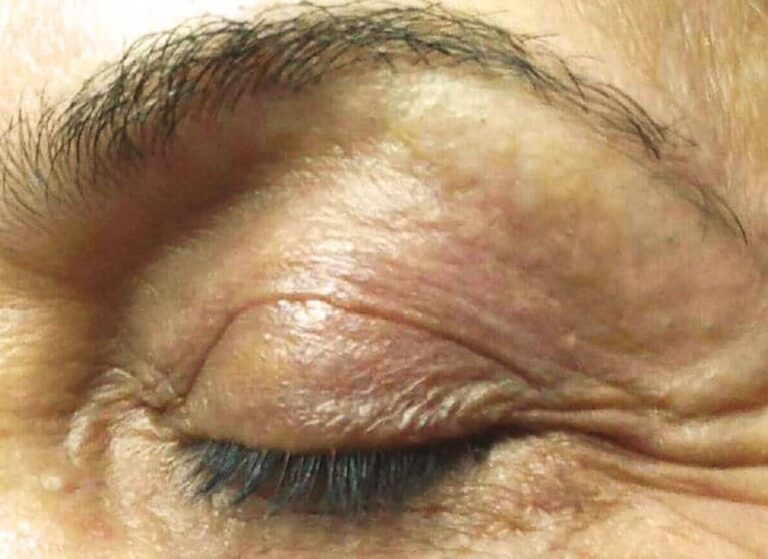
Plasma treatment with Plexr on the upper eyelid. Image courtesy of GMV, maker of Plexr. Individual results may vary.
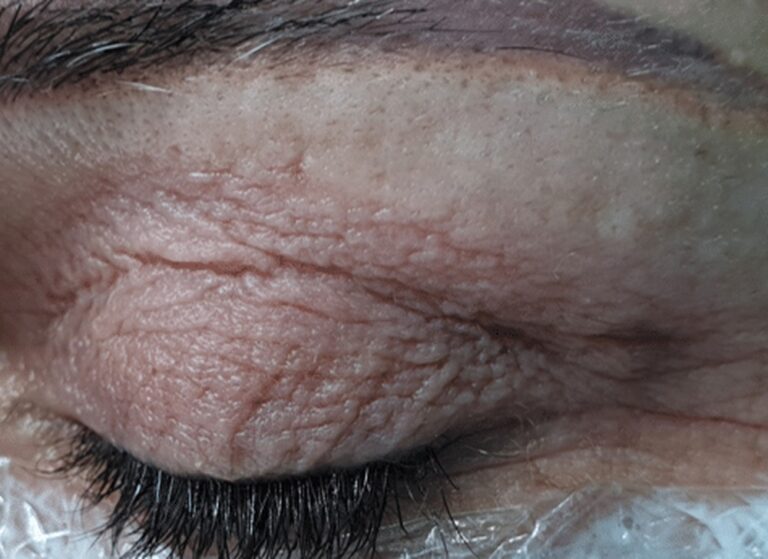
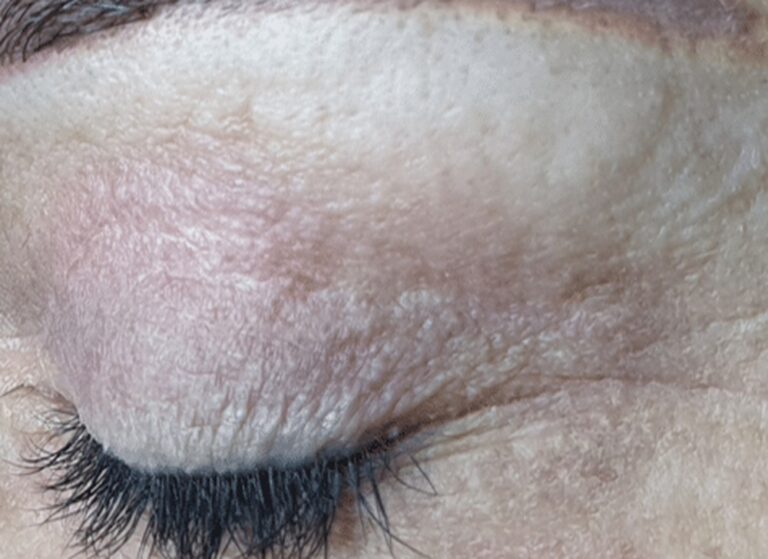
Plasma treatment with Plexr on the upper eyelid. Image courtesy of GMV, maker of Plexr. Individual results may vary.
Brighter, more open eyes from a plasma treatment.
A plasma device, a local anaesthetic and about a week of recovery.
Upper and lower lids are treated separately.
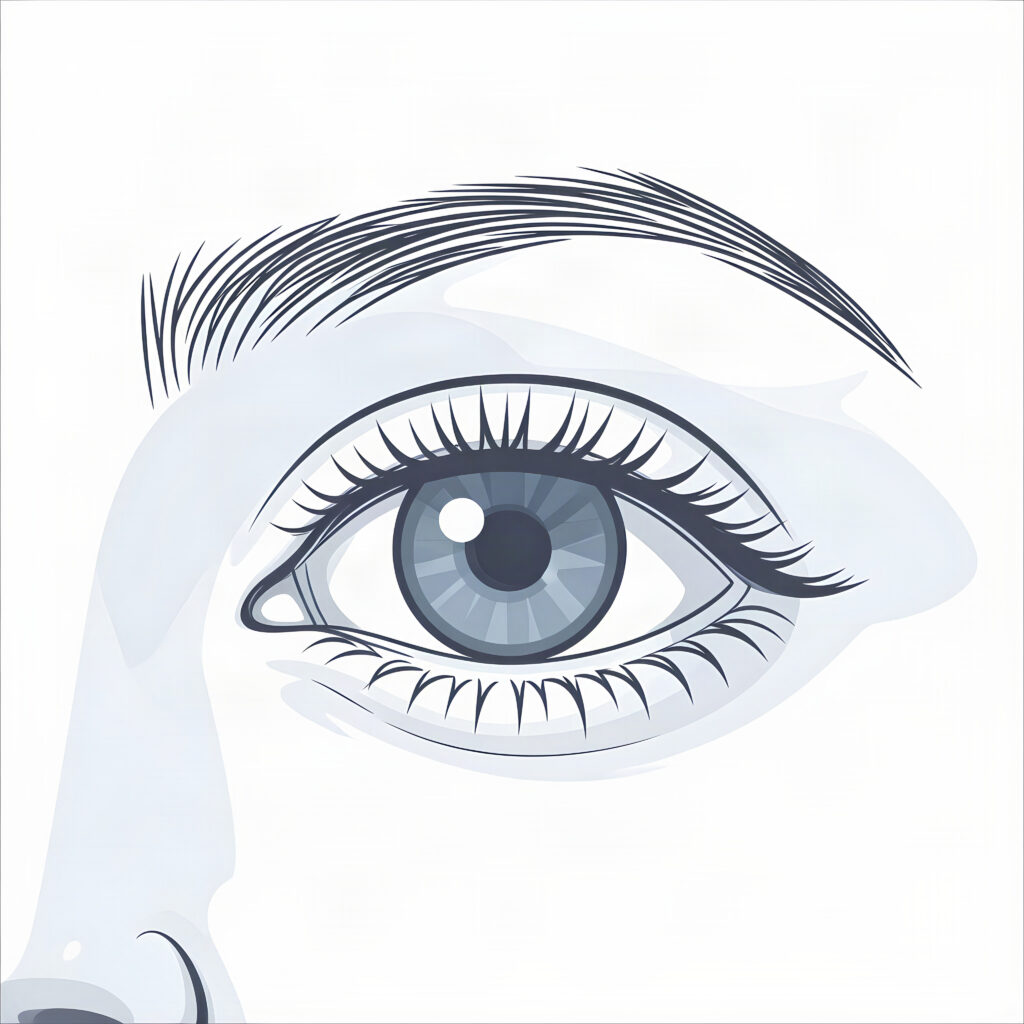
The upper lid that has loosened and started to rest on the lash line, where eyeshadow creases into a fold that was not there before.
Loose, crepey lower lid skin, refreshed with a far lighter touch than surgery.
Around forty five minutes of numbing, then thirty to forty five minutes of treatment. Seven to ten days of swelling and crusts, your first proper look at four weeks, the final result at three months, often lasting two to three years depending on the individual.
Your clinician assesses lid laxity, checks how much of the hooding is skin against fat, and confirms you are a candidate. Where surgery would serve you better, your clinician says so at the consultation and points you to the right door.
What you feel or see A close look at the lids.
What to do Ask whether one treatment or two is likely for the result you picture.
Strong topical anaesthetic for around forty five minutes; the eyelid is sensitive and this step is given its full time. Then a grid of plasma points across the treatment area.
What you feel or see Heat and small sharp sensations. Tiny brown dots appear as work progresses.
What to do Arrange a lift home if you prefer; the lids will swell.
Swelling peaks on the second morning, which is completely normal for eyelids, then settles day by day. The dots remain as small crusts.
What you feel or see Puffy lids, tight skin.
What to do Sleep propped up.
Swelling subsides and the crusts begin to flake away on their own.
What you feel or see Lids look and feel more normal each day.
What to do Let the crusts fall away on their own, which keeps the skin clear.
The lid looks tighter immediately, though swelling hides it for a week. Your first proper look is at four weeks.
What you feel or see A visibly tighter lid.
What to do Photographs in the same light as before.
The tightening builds as collagen forms. The result at three months is better than the result at three weeks.
What you feel or see Steady improvement.
What to do Nothing. Let it build.
One treatment produces a visible improvement. Two treatments spaced twelve weeks apart produce the result most patients are actually picturing, and your clinician tells you at the consultation which you are likely to need, so you can plan both from the start.
What you feel or see The final result of this treatment.
What to do If a second was planned, it happens now.
Results often last two to three years, varying by individual, and your clinician is happy to reassess whenever you notice the lids softening again.
What you feel or see Brighter, more open-looking eyes, varying by individual.
What to do Reassess when you notice the change.
Your clinician assesses lid laxity, checks how much of the hooding is skin against fat, and confirms you are a candidate. Where surgery would serve you better, your clinician says so at the consultation and points you to the right door.
Strong topical anaesthetic for around forty five minutes; the eyelid is sensitive and this step is given its full time. Then a grid of plasma points across the treatment area.
Swelling peaks on the second morning, which is completely normal for eyelids, then settles day by day. The dots remain as small crusts.
Swelling subsides and the crusts begin to flake away on their own.
The lid looks tighter immediately, though swelling hides it for a week. Your first proper look is at four weeks.
The tightening builds as collagen forms. The result at three months is better than the result at three weeks.
One treatment produces a visible improvement. Two treatments spaced twelve weeks apart produce the result most patients are actually picturing, and your clinician tells you at the consultation which you are likely to need, so you can plan both from the start.
Results often last two to three years, varying by individual, and your clinician is happy to reassess whenever you notice the lids softening again.
Your first proper look is at four weeks.
The tightening builds as collagen forms. The result at three months is better than the result at three weeks.
Every patient is assessed by a qualified clinician, a doctor, nurse or other qualified practitioner, before anything is booked.

Lead Practitioner
Award-winning aesthetic nurse practitioner with more than twenty years of specialist NHS nursing and over a decade in advanced aesthetic medicine. Qualified independent prescriber and the clinic’s CQC registered manager.
The right choice depends on your skin and what you are treating; a consultation settles it.
| Non-surgical blepharoplastyPlasma | Surgical blepharoplastyWith an oculoplastic surgeon | |
|---|---|---|
| What it does | Tightens loose eyelid skin without cutting | Removes skin and repositions fat |
| Best for | Mild to moderate skin laxity | Prolapsed fat, or lids that obstruct vision |
| Result | Visible improvement, often lasting 2 to 3 years | A bigger and longer-lasting result |
| See pricing |
Where the bulge is prolapsed fat, or the lids obstruct your vision, an oculoplastic surgeon gives the better result, and your clinician will refer you to one.
Downtime7 to 10 days
ResultsVisible at 4 weeks, settled at 3 months
Lasts2 to 3 years
Your plan and the number of sessions are agreed at your consultation, before anything is booked.
A plasma treatment that tightens loose eyelid skin without cutting. A fine probe creates an arc of plasma just above the skin, removing microscopic points of the surface and causing the surrounding skin to contract. No scalpel, no stitches, no general anaesthetic. It is a popular treatment at our Wimpole Street clinic.
Eyelid skin is the thinnest on the body and it is usually the first thing to go. The upper lid loosens and rests on the lash line, eyeshadow creases into a fold that was not there before, and people begin asking whether you are tired.
It is the elegant middle path between leaving things be and having surgery, and it suits mild to moderate hooding where the skin has lost tone and fat has stayed in place. Where lids are heavy enough to affect your field of vision, your clinician points you to an oculoplastic surgeon.
They do different jobs. Surgery removes skin and repositions fat, and produces a bigger and longer-lasting result. Plasma treats mild to moderate skin laxity beautifully, avoids a scalpel and a general anaesthetic, and often lasts two to three years, depending on the individual.
£650 for upper or lower lids and £1,099 for both together at our Marylebone clinic. Many patients have a second treatment at twelve weeks for a stronger result.
Topical anaesthetic is applied for around forty five minutes beforehand. During treatment you feel heat and small sharp sensations. It is uncomfortable rather than painful, and the eyelid is more sensitive than most areas.
Seven to ten days. Swelling peaks on days two and three, so plan a quiet couple of days at home. Small crusts sit on the treated area for about a week and flake off on their own.
The lid is tighter immediately and the swelling settles within a week. Your first proper look is at four weeks and the final result at three months, as collagen builds.
One produces visible improvement. Two, twelve weeks apart, produce the result most patients are picturing. Your clinician tells you which suits your lids at the consultation.
Often two to three years, varying by individual, and you can come back to reassess whenever you notice the lids softening again.
No, because nothing is cut. The tiny crusts flake away on their own within about a week, and letting them do so keeps the skin clear.
Your clinician assesses your skin type carefully at the consultation and plans the treatment around it, so you know exactly what to expect for your skin before anything is booked.
Once the crusts have come away naturally, which takes about a week. Waiting keeps the skin clean and lets the crusts fall at their own pace.
If your hooding is loose skin, you are very likely to be a lovely candidate. Where the bulge is prolapsed fat, or the lids obstruct your vision, an oculoplastic surgeon gives the better result, and your clinician will refer you to one.
Yes, and it works well for crepey lower lid skin. Lower lids are treated more gently because the skin is thinner still.
A brand of plasma device used for this treatment. Plasma soft surgery, Plexr and non-surgical blepharoplasty are commonly used to mean the same procedure.
Every plan starts with a conversation and a close look at your eyes, so the treatment you book is the one that suits you.
Tell us what you’d like to achieve. Regents Park Aesthetics will be in touch within one working day to arrange your consultation.
