
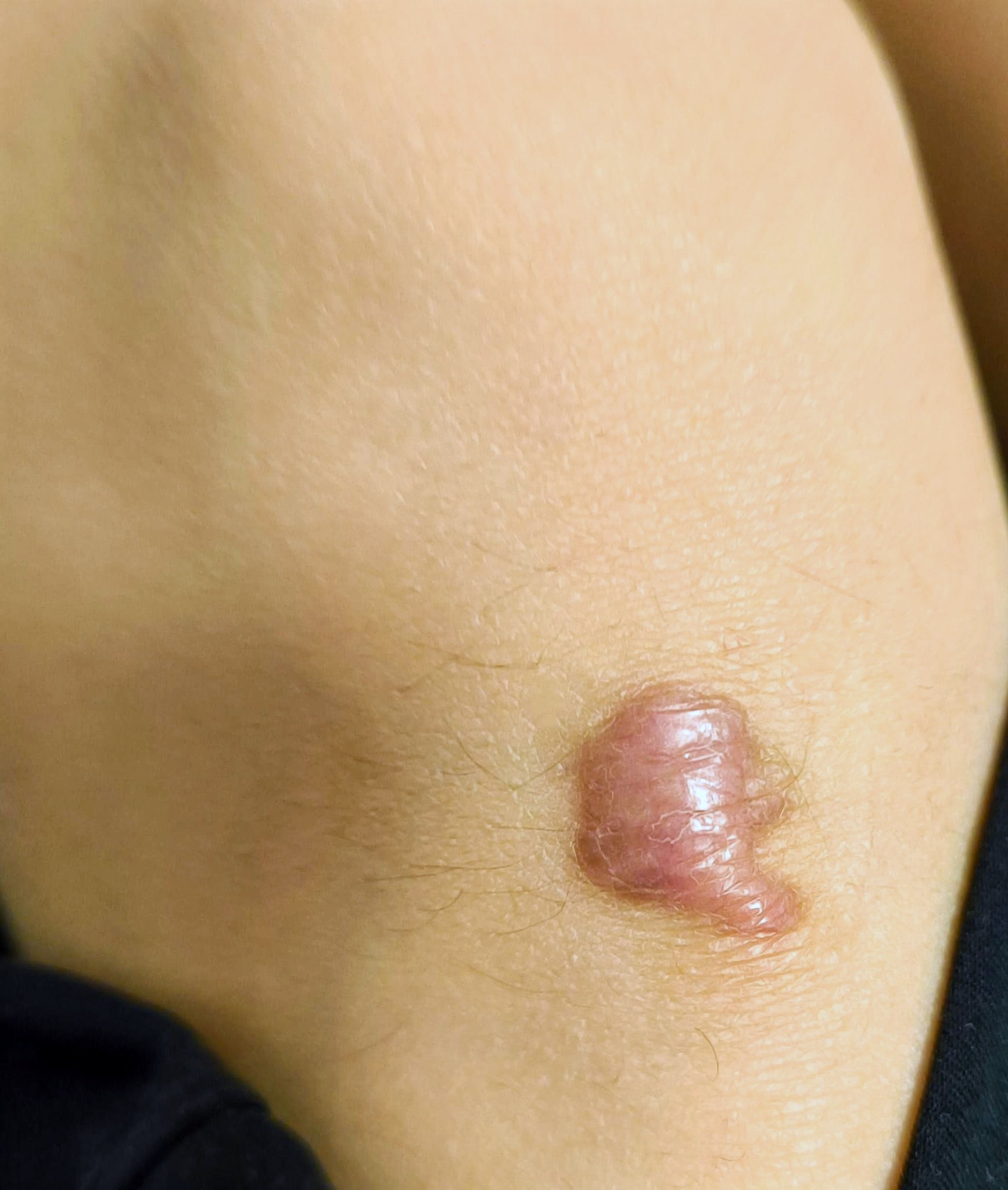
Keloid and Hypertrophic Scars
A raised scar that flattens, fades and stops catching the light. Raised scarring is the opposite problem to pitted scarring, with its own treatments, and at our Berkhamsted clinic the first step is working out exactly which type yours is.
At a glance
- Types Hypertrophic and keloid
- Key difference Keloids grow beyond the original wound
- Clinic Regents Park Aesthetics Berkhamsted
- Course Varies
- First step Assessment and typing





What it is and why it happens
Most scarring people ask about is pitted, where too little collagen was laid down. Raised scarring is the opposite: too much. The distinction that matters is whether the scar stays within the boundary of the original wound.
A hypertrophic scar is raised, red and firm, and it stays within the original injury. It frequently softens on its own over one to two years, and it responds well to treatment, especially in that first year while it is still remodelling. A keloid grows beyond the original wound into the surrounding skin, often continuing to expand months or years afterwards, and it can be itchy. Keloids are more common in deeper skin tones and run strongly in families, and neither is anything you did.
That difference shapes the plan. Hypertrophic scars are treated at our Berkhamsted clinic with SkinPen microneedling, Exion Clear and Dermalux LED, and your clinician explains at consultation what suits a true keloid.
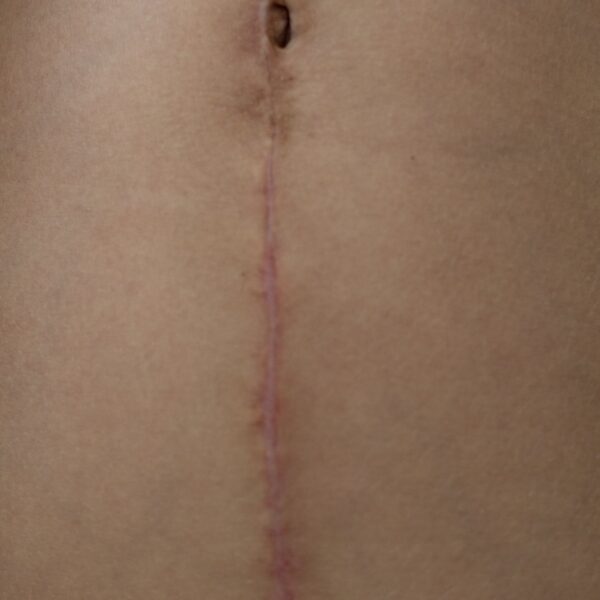
Treatments that address it
| SkinPen Microneedling For hypertrophic scarring, remodelling the excess collagen and softening height, colour and texture across a course. Kind to every skin tone, a day of pinkness. From £250. | Exion Clear Radiofrequency resurfacing for mature hypertrophic scars where texture leads. Suits every skin type, around a day of redness, three sessions four to six weeks apart. From £400. | Dermalux LED Medical-grade light that calms redness and supports healing, on its own for a fresh scar or between microneedling and Exion sessions to speed recovery. From £50. | |
|---|---|---|---|
 |
 |
 |
|
| £250 | £400 | £50 | |
| Explore SkinPen Microneedling | Explore Exion Clear | Explore Dermalux LED |
- £250
- £400
- £50
Compared side by side
How we assess and treat
Assessment is mostly about typing, and it comes down to one question: does the scar stay inside the original wound or has it grown beyond it? We also ask whether it is still changing, how old it is, and whether raised scars run in your family, because keloid tendency often does. A skin type history completes the picture.
For hypertrophic scarring the plan is built around remodelling the excess collagen. SkinPen microneedling softens height, colour and texture across a course and suits every skin tone. Exion Clear radiofrequency resurfacing smooths mature scars where texture is the main issue, three sessions four to six weeks apart. Dermalux LED calms redness and supports healing between sessions. Silicone at home runs alongside all of it. Your clinician covers suitability, timing and aftercare at your consultation, and the team is a phone call away afterwards.

Can you treat it at home?
Silicone is the one home measure with genuinely good evidence, in sheet or gel form, used consistently for at least three months and ideally longer. It is inexpensive, available from any pharmacy, and the reason it is under-used is simply that it asks for months of daily application. Stick with it and it earns its place.
Pressure therapy helps hypertrophic scarring, particularly after burns, and is usually arranged through the team who treated the injury. Sun protection matters because new scars pigment easily, and a darkened scar shows far more than a pale raised one. Massaging a scar once it has fully closed improves pliability modestly. Vitamin E oil and onion extract gels are widely sold and weakly supported, so spend the money on silicone and sunscreen instead.
The most useful thing of all is timing. Scars respond far better in the first year while still remodelling, so the sooner you come in, the more we can do.

Related concerns
Meet our team of experts
Raised scars at our Berkhamsted clinic are assessed by Anna Stenekova and the skin therapists, with Kay Greveson or Dr Grace Adamson for anything injectable.
Frequently Asked Questions
A hypertrophic scar stays within the boundary of the original wound. A keloid grows beyond it into the surrounding skin, often continuing months or years later. That single distinction shapes the whole plan, which is why typing comes first at our Berkhamsted clinic.
Hypertrophic scars frequently soften over one to two years, and treatment in that first year speeds and deepens the change. Keloids tend to stay, so an early assessment is worth having.
Keloids behave differently from hypertrophic scars, and your clinician explains at consultation what suits yours. Hypertrophic scars, which stay within the wound, are what we treat at our Berkhamsted clinic.
They run strongly in families and are considerably more common in deeper skin tones. Neither is anything you did, and knowing your tendency helps your clinician plan every treatment well.
It is the home measure with the best evidence, in sheet or gel form, used daily for at least three months. It is inexpensive and quietly effective, and it runs alongside everything we do in clinic.
The evidence is thin, and it irritates a fair number of people. Silicone and sunscreen are the better buy.
Within the first year, while it is still remodelling. That is when microneedling and Exion Clear have the most to work with, so the sooner you come in, the better the result.
Raised scars are softened in height, colour and texture, often considerably, so they stop catching the eye. The realistic goal is a scar that blends in rather than one that vanishes.
Yes. SkinPen microneedling is our first choice precisely because it is kind to every skin tone, Exion Clear suits every skin type, and Dermalux LED has no effect on pigment at all.
Radiofrequency resurfacing smooths the texture of a mature hypertrophic scar over three sessions, four to six weeks apart, with around a day of redness afterwards. It suits every skin type.
SkinPen microneedling from £250, Exion Clear from £400 and Dermalux LED from £50 at our Berkhamsted clinic. Your clinician quotes the course at consultation.
Keep up the silicone daily, wear sunscreen on the scar every day, and massage it gently once it has fully closed. Your clinician covers suitability, timing and aftercare at your consultation, and the team is a phone call away afterwards.
Anna Stenekova and our skin therapists at the clinic, with Kay Greveson or Dr Grace Adamson, who is in Berkhamsted every Thursday, for anything injectable.
113 High Street, Berkhamsted HP4 2DJ, a short walk from the station and a short drive from Tring, Hemel Hempstead, Chesham and Amersham.