Adult and Hormonal Acne
Acne in your thirties is a different animal from acne at fifteen, and the products aimed at teenagers only stir it up. At our Berkhamsted clinic the skin room treats the cause as well as the spots, with ClearSkin laser, peels, LED and a routine your skin can actually live with.
At a glance
- Types Hormonal, inflammatory, comedonal, fungal folliculitis
- Clinic Regents Park Aesthetics Berkhamsted
- Course 4 to 6 sessions
- Priority Control acne before treating scarring
- First step Assessment and type identification





What it is and why it happens
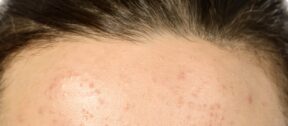
Adult acne is not teenage acne that forgot to leave. It sits lower on the face, along the jaw, chin and neck rather than across the forehead and nose, it produces deeper, more tender lesions that linger longer, and it is far more likely to be hormonally driven. That last point changes everything about how it is treated.
Acne that appears or worsens in the week before a period and settles along the jawline points toward a hormonal driver, and treating the skin alongside that driver gives a result skincare alone rarely manages. Where the pattern suggests a hormonal influence, Kay Greveson, our founder and advanced nurse prescriber, talks it through with you so the plan addresses both.
The other thing worth saying early is that the drying, stripping products marketed at teenagers work against adult skin. Adult skin is thinner and produces less oil, so a routine built on full-strength benzoyl peroxide and salicylic acid can wear down the barrier and provoke more inflammation. In the skin room at our Berkhamsted clinic, Anna and the skin therapists identify which type you have and treat it accordingly, with the ClearSkin acne laser, medical peels, Dermalux LED and HydraFacial all under one roof.

Treatments that address it
| Harmony ClearSkin A 1540nm laser with vacuum and contact cooling that treats all three drivers of acne in one pass: it calms the oil gland, clears the bacteria and lifts congestion. From £120. | Chemical Peels Salicylic formulations are oil-soluble and get into the pore, treating active acne and the marks it leaves in the same course. The Perfect Peel with acne booster is the favourite. | Dermalux LED Blue light targets acne bacteria and red light calms inflammation, with no heat and minimal downtime. Gentle enough to use through a flare, and a lovely add-on to any other treatment. | HydraFacial Vacuum extraction clears congestion without the squeezing that bruises skin and leaves marks. Ideal for comedonal acne and congestion, and skin feels clean for weeks. | |
|---|---|---|---|---|
 |
 |
 |
 |
|
| £120 | £120 | £50 | £105 | |
| Explore ClearSkin | Explore Chemical Peels | Explore Dermalux LED | Explore HydraFacial |
- £120
- £120
- £50
- £105
Compared side by side
How we assess and treat
Assessment at our Berkhamsted clinic starts by establishing the type. Comedonal, inflammatory, hormonal and fungal acne each want a different treatment, and the last of those is not acne at all. We ask about timing across the cycle and about the pattern on the face, because those answers identify most hormonal cases, and where a hormonal driver looks likely Kay Greveson plans the skin work with that in mind. Prescription-only medicines are only considered after a face-to-face consultation with a prescriber.
We also ask what you are currently using, and frequently suggest putting most of it away. People regularly arrive using four actives at once on a tired barrier, and simplifying the routine improves things before any clinic treatment begins.
Order matters. Active acne is calmed before scarring is treated, because resurfacing skin that is still breaking out creates new marks faster than we clear old ones. Peels run happily through both phases and help the marks along the way, so the plan keeps moving while the skin settles. Your clinician covers suitability, timing and aftercare at your consultation, and the team is a phone call away afterwards.

Can you treat it at home?
Stop stripping the skin. It is the single most common habit in adult acne, and the easiest to change. Foaming cleansers, alcohol toners, physical scrubs and full-strength benzoyl peroxide wear down the barrier, and a worn barrier is more inflamed rather than less. Skin that feels tight after cleansing has been over-cleansed.
What earns its place: a gentle vitamin A serum, introduced slowly and used consistently; niacinamide for the barrier; salicylic acid used sparingly rather than everywhere; and a non-comedogenic sunscreen daily, because acne treatment increases sensitivity and post-inflammatory marks darken in the sun. Prescribed topicals that treat both the acne and the marks can be added after your consultation.
On diet, the evidence is modest but real for high-glycaemic foods and for skimmed milk specifically, so a trial is worthwhile even though it is rarely the whole answer. And the difficult one: stop picking. Every squeezed lesion pushes inflammation deeper and turns a spot that would have healed cleanly into a mark that lasts months.

Meet our team of experts
Adult acne at our Berkhamsted clinic is assessed and treated by Anna Stenekova and the skin therapists, with Kay Greveson, our founder and advanced nurse prescriber, alongside wherever a hormonal driver or a prescription needs considering.
Frequently Asked Questions
Adult acne is usually hormonally driven and behaves differently from teenage acne. It sits along the jaw, chin and neck, produces deeper and more tender lesions, and lingers longer. Stress, some medications and skincare that wears down the barrier all play a part, and all of them can be addressed.
Acne driven by hormonal influence on the oil glands, typically flaring in the week before a period and sitting along the lower face. Where the pattern points that way, Kay Greveson, our advanced nurse prescriber, talks it through with you so the skin plan and the driver are addressed together.
Both ends at once. The skin is treated with the ClearSkin laser, peels and a barrier-respecting routine, and the hormonal driver is understood and planned around rather than ignored, because skin treatment alone works harder than it needs to while the driver continues.
Yes. The Harmony ClearSkin laser at our Berkhamsted clinic treats all three drivers in one pass: it calms oil production, clears the bacteria and lifts congestion. Four to six sessions, from £120.
A gentle non-foaming cleanser, a vitamin A serum introduced slowly, niacinamide and a non-comedogenic sunscreen, with a prescribed topical added where it suits. Not the stripping regime aimed at teenagers, which wears down an adult barrier and provokes more inflammation.
Not necessarily, but at a lower strength and not everywhere. Full-strength benzoyl peroxide across the whole face is hard on adult skin. Spot treatment or a lower concentration usually serves you better.
There is modest but real evidence for high-glycaemic foods and skimmed milk specifically. A trial is worthwhile, and it is rarely the whole answer or the cause of most adult acne.
The active acne is calmed first, because resurfacing skin that is still breaking out creates new marks faster than we clear old ones. Peels run through both phases and help the marks along, so progress starts straight away.
Oiliness settles first, often within two laser sessions. Active lesions reduce across the course, with the clearest change between sessions three and five.
Yes. Kay Greveson is an advanced nurse prescriber, so prescribed topicals and other options can sit alongside the clinic treatments where they suit you. Prescription-only medicines are only considered after a face-to-face consultation with a prescriber.
That may be fungal folliculitis rather than acne, which is common on the chest and back and behaves quite differently. Your therapist checks for it at your consultation, because the treatment is not the same.
LED and gentle peels, yes. Laser and stronger peels usually wait until the flare has settled a little. We work around where your skin is on the day rather than to a fixed protocol.
Anna Stenekova and the skin therapists in the skin room at our Berkhamsted clinic, with Kay Greveson alongside wherever a hormonal driver or a prescription needs considering.
113 High Street, Berkhamsted HP4 2DJ, a short walk from the station and a short drive from Tring, Hemel Hempstead, Chesham and Amersham.